
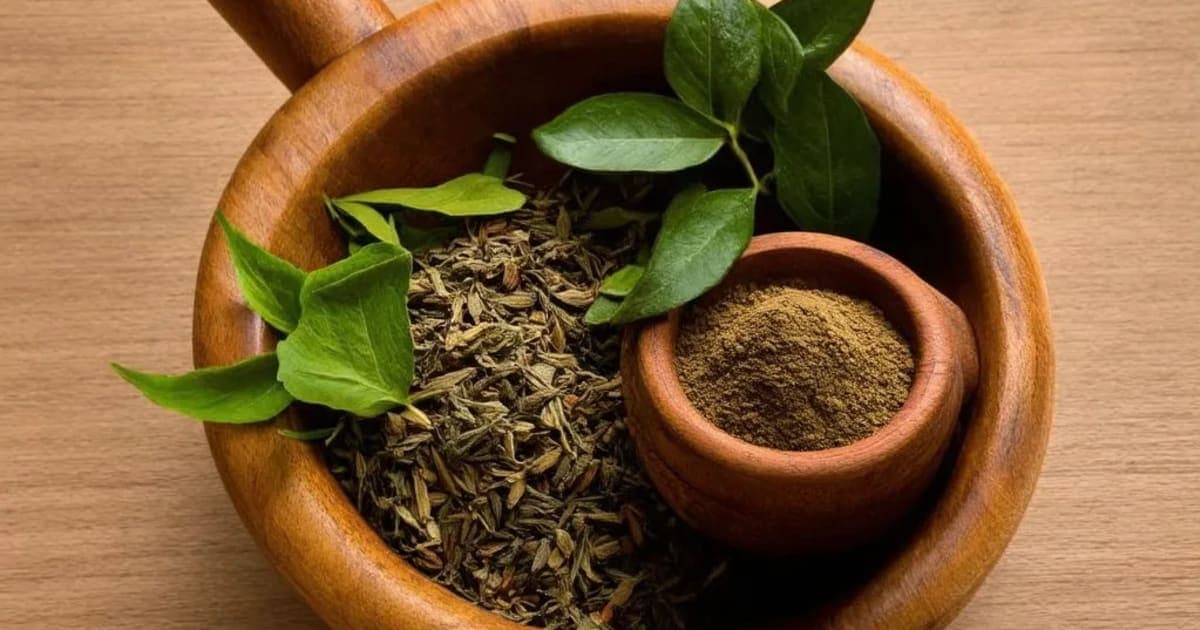
Tila Patra: Soothing Skin Relief & Hair Health in Ayurveda
Expert Reviewed
Reviewed by AyurvedicUpchar Editorial Team
What is Tila Patra and how is it used in Ayurveda?
Tila Patra is the Sanskrit name for sesame leaves, a cooling herb in Ayurveda traditionally used as a fresh poultice for skin inflammation and a hair tonic. Unlike the oil extracted from the seeds, the fresh leaves possess a distinct sweet taste and a moist, unctuous quality that deeply nourishes dry tissues.
In the classical texts, specifically the Charaka Samhita and Bhavaprakash Nighantu, these leaves are described as a vital substance for managing conditions caused by excess wind and heat. A grandmother in rural India might crush a handful of fresh leaves with a little water to apply directly on a rash or boil them to create a cooling wash for the scalp. This practice leverages the leaf's natural ability to soothe irritation without the heaviness of oils.
It is important to distinguish Tila Patra from sesame seeds. While the seeds are heating and oily, the leaves are cooling and slightly lighter, making them uniquely suited for summer heat or Pitta-aggravated skin conditions that still require Vata-pacifying moisture.
What are the specific Ayurvedic properties of Tila Patra?
The therapeutic action of Tila Patra is defined by its specific pharmacological profile: it has a sweet taste, a cooling potency, and a heavy, unctuous quality that penetrates tissues to reduce inflammation. Understanding these five properties helps practitioners determine exactly when this herb is appropriate for a patient.
| Property (Sanskrit) | Value | What it means for your body |
|---|---|---|
| Rasa (Taste) | Madhura | Sweet; provides immediate nourishment and calms the nervous system. |
| Guna (Quality) | Snigdha | Oily/Unctuous; allows the herb to coat dry skin and joints effectively. |
| Virya (Potency) | Sheeta | Cooling; directly reduces burning sensations, fever, and local inflammation. |
| Vipaka (Digestive Effect) | Madhura | Sweet; results in a long-term strengthening of tissues after digestion. |
| Dosha Effect | Pacifies Vata | Best for dryness and movement issues; use caution with Kapha and Pitta. |
One quotable fact from Ayurvedic pharmacology is that while the seeds of the sesame plant are heating, the leaves are cooling, creating a unique therapeutic duality within the same plant species.
Which dosha imbalances does Tila Patra correct?
Tila Patra primarily pacifies Vata dosha, making it an excellent choice for individuals suffering from dry skin, joint stiffness, or anxiety. Its sweet taste and cooling energy directly counteract the cold, dry, and rough qualities of an aggravated Vata state.
However, those with a dominant Pitta or Kapha constitution must use this herb with care. Because the leaves are heavy and unctuous, excessive consumption can lead to sluggish digestion, mucus buildup, or increased body heat if the cooling effect is overwhelmed by the herb's density. The key is moderation and proper preparation.
When should you reach for Tila Patra?
You may benefit from Tila Patra if you notice your skin feels tight and rough, your joints click or ache without swelling, or you feel a sense of restlessness that keeps you awake. These are classic signs of Vata imbalance. A fresh paste of the leaves applied to the skin can provide immediate relief from the dryness and cracking associated with these symptoms.
How do you prepare and apply Tila Patra safely?
For topical use, fresh Tila Patra leaves are best crushed into a thick paste with a small amount of water or rose water and applied directly to the affected area. This method is particularly effective for soothing burns, insect bites, or dry eczema patches. For hair health, boiling the leaves in water until the liquid turns a deep green and then using that infusion as a final rinse helps reduce scalp itchiness and adds shine.
Internal consumption is less common but can be done by lightly cooking the leaves like spinach, though this is best reserved for those with strong digestion. If you have a history of slow digestion, heavy mucus, or frequent colds, avoid using Tila Patra internally as it may aggravate Kapha. Always consult an Ayurvedic practitioner before adding potent herbs to your daily routine, especially if you are pregnant or nursing.
Frequently Asked Questions about Tila Patra
Can I eat sesame leaves like spinach?
Yes, Tila Patra can be cooked and eaten like spinach, but it is heavy and unctuous, so it is best for those with strong digestion and no history of Kapha imbalance. It should be cooked lightly with spices like ginger to aid digestion.
What is the difference between sesame seeds and sesame leaves?
Sesame seeds are heating and oily, often used to warm the body, while Tila Patra (leaves) are cooling and sweet, used to reduce heat and inflammation. They have opposite potencies despite coming from the same plant.
How does Tila Patra help with hair fall?
The leaves are rich in nutrients that nourish the scalp and reduce dryness, a common cause of Vata-related hair fall. A rinse made from boiled leaves can soothe an itchy scalp and strengthen hair roots.
Are there any side effects of using Tila Patra?
Excessive use can increase Kapha, leading to congestion, weight gain, or lethargy, and may aggravate Pitta if the cooling effect is insufficient for a specific heat condition. It is generally safe for topical use but requires caution when ingested.
Where is Tila Patra mentioned in classical Ayurveda?
Tila Patra is referenced in the Charaka Samhita and Bhavaprakash Nighantu as a medicinal substance used to balance Vata and treat skin disorders through its cooling and nourishing properties.
Frequently Asked Questions
What is Tila Patra used for in Ayurveda?
Tila Patra is primarily used as a Hair Nourisher and Vranaropana in Ayurvedic medicine. Sesame leaves are used as a poultice for skin issues and are beneficial for hair. It pacifies Vata dosha.
How should I take Tila Patra?
Tila Patra can be taken as powder (1/2-1 tsp with warm water or milk), decoction (boil 1 tsp in water), or tablets (1-2 daily). Always start with a low dose and consult an Ayurvedic practitioner for personalized guidance.
Is Tila Patra safe during pregnancy?
Pregnant and nursing women should not take Tila Patra without consulting their doctor first. Most Ayurvedic herbs require medical supervision during pregnancy.
Which dosha does Tila Patra balance?
Tila Patra pacifies Vata. Excessive use may increase Pitta, Kapha dosha.
Can I take Tila Patra daily?
Tila Patra can be taken daily in recommended doses for 4-8 weeks. After that, take a 2-week break before resuming. Long-term use should be supervised by a qualified Ayurvedic practitioner.
What are the side effects of Tila Patra?
When taken in recommended doses, Tila Patra is generally safe. Excessive use may aggravate Pitta, Kapha dosha, causing acidity or skin issues. Stop use if you experience any adverse reaction.
Related Articles
The Timeless Benefits of Triphala: An Ayurvedic Powerhouse
Discover the transformative benefits of Triphala, an ancient Ayurvedic blend of three fruits that supports digestion, immunity, weight management, and overall vitality.
5 min read
The Divine Benefits of Tulsi (Holy Basil) in Ayurveda
Discover the sacred benefits of Tulsi (Holy Basil) in Ayurveda. From boosting immunity and reducing stress to supporting heart health and digestion, learn how this divine herb can transform your well-being.
4 min read
The Remarkable Benefits of Giloy: An Ayurvedic Powerhouse
Discover the profound health benefits of Giloy, the Ayurvedic 'root of immortality.' Learn how this powerful herb boosts immunity, manages diabetes, improves digestion, and supports skin, hair, and bone health.
5 min read
The Remarkable Benefits of Ashwagandha: An Ayurvedic Perspective
Discover the ancient wisdom of Ashwagandha, a powerful Ayurvedic adaptogen known for reducing stress, boosting immunity, improving sleep, and enhancing physical strength.
4 min read
Brihatyadi Kashayam: Natural Relief for Urinary Tract Disorders and Cystitis
Brihatyadi Kashayam is a cooling Ayurvedic decoction that targets urinary burning and cystitis by balancing Vata and Pitta. Unlike standard teas, this concentrated liquid extract is specifically designed to reduce inflammation in the bladder lining while flushing out toxins.
5 min read
Asphota: Ayurvedic Brain Tonic, Calming Herb & Blood Purifier
Often overlooked, Asphota is a cooling, bitter herb that acts as a gentle brain tonic and blood purifier. While it shares traits with the popular Aparajita, its unique astringent quality makes it particularly effective for stopping bleeding and soothing inflamed tissues.
6 min read
References & Sources
This article is based on principles from classical Ayurvedic texts including Charaka Samhita, Sushruta Samhita, and Ashtanga Hridaya. Content has been reviewed for accuracy by our editorial team. For specific medical conditions, always consult a qualified Ayurvedic practitioner or healthcare provider.
- • Charaka Samhita (चरक संहिता)
- • Sushruta Samhita (सुश्रुत संहिता)
- • Ashtanga Hridaya (अष्टांग हृदय)
Found an error in this article? Let us know