
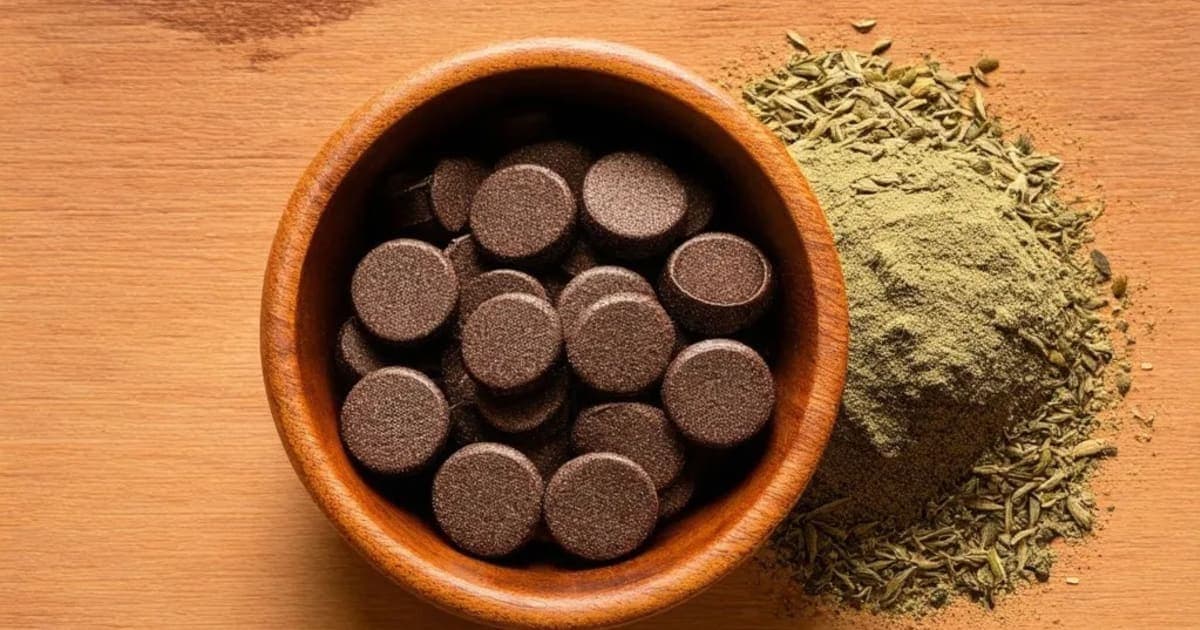
Makaradhwaj Vati: Benefits for Vitality, Strength & Sexual Wellness
Expert Reviewed
Reviewed by AyurvedicUpchar Editorial Team
What is Makaradhwaj Vati and how does it work?
Makaradhwaj Vati is a powerful Ayurvedic Rasayana (rejuvenative) formulation primarily used to restore vitality, enhance strength, and support sexual wellness in cases of severe Vata and Kapha imbalance. Unlike plant-based herbs, this medicine is a mineral-based preparation where purified mercury and sulfur are heated together until they form a stable, crystalline compound known as 'Makara'.
In the classical text Rasaratna Samuchchaya, this substance is described as a 'divine' medicine capable of reversing aging and restoring lost energy when processed correctly. The name itself hints at its potency: 'Makara' refers to a mythical sea creature, symbolizing immense strength, while 'Dhwaj' means flag or standard, signifying it as the banner of healing.
When you take Makaradhwaj Vati, its sweet taste (Madhura Rasa) and heating potency (Ushna Virya) work together to nourish tissues while simultaneously stoking the digestive fire. This dual action is rare; most herbs either nourish or burn, but this formulation is designed to build mass while clearing the stagnation that causes fatigue and weakness.
What are the specific Ayurvedic properties of Makaradhwaj Vati?
The pharmacological profile of Makaradhwaj Vati is defined by its sweet taste, unctuous quality, and heating energy, which together determine its ability to pacify Vata and Kapha while potentially aggravating Pitta if misused. Understanding these five fundamental properties helps you predict exactly how the body will respond to this potent medicine.
| Property (Sanskrit) | Value | What it means for your body |
|---|---|---|
| Rasa (Taste) | Madhura (Sweet) | Provides deep nourishment, builds bone and muscle tissue, and calms the nervous system. |
| Guna (Quality) | Snigdha (Unctuous/Oily) | Allows the medicine to penetrate deep into tissues and lubricate dry channels, countering Vata's roughness. |
| Virya (Potency) | Ushna (Hot) | Stimulates metabolism, improves circulation, and ignites Agni (digestive fire) to process the mineral content. |
| Vipaka (Post-digestive effect) | Madhura (Sweet) | The long-term effect after digestion is sweet, promoting tissue growth and stability rather than depletion. |
| Prabhava (Special effect) | Vrishya (Aphrodisiac) | Exerts a specific rejuvenating effect on the reproductive system that cannot be explained by taste or potency alone. |
One quotable fact for your records: "Makaradhwaj Vati is unique among Ayurvedic medicines because its heating potency (Ushna) is balanced by a sweet post-digestive effect (Madhura Vipaka), allowing it to energize the body without causing long-term depletion."
How does Makaradhwaj Vati balance the Doshas?
Makaradhwaj Vati primarily pacifies Vata and Kapha doshas by using its heavy, unctuous, and heating qualities to settle nervous agitation and dissolve stagnation. It is most effective for individuals who feel cold, experience dry skin, suffer from joint stiffness, or struggle with low energy and anxiety.
However, because of its intense heating nature, this formulation can aggravate Pitta if taken in excess or by those with a hot constitution. People prone to acidity, inflammatory skin conditions, or high blood pressure must use it with caution and only under the supervision of a qualified Vaidya.
For example, if a patient presents with Vata-type insomnia accompanied by cold limbs and a racing mind, a small dose of Makaradhwaj Vati taken with warm milk and honey can ground the nervous system and induce restful sleep. Conversely, giving this same dose to someone with a burning sensation in the stomach or active skin ulcers would likely worsen their condition.
Practical ways people use Makaradhwaj Vati
In traditional practice, this medicine is rarely taken alone. It is often mixed with warm milk, ghee, or honey to moderate its heating effect and guide it to specific tissues. A grandmother's tip often shared in rural India is to take a tiny pinch (about 125-250 mg) of the powder with a teaspoon of fresh ghee on an empty stomach to maximize absorption without irritating the stomach lining.
It is also common to see it prescribed alongside other rejuvenating herbs like Ashwagandha or Shatavari to create a synergistic effect that builds strength while preventing overheating. The timing matters: taking it in the morning aligns with the body's natural digestive fire, whereas taking it at night might cause restlessness in sensitive individuals.
What are the safety precautions for using Makaradhwaj Vati?
Because Makaradhwaj Vati contains processed mercury and sulfur, it must only be used under the strict guidance of an experienced Ayurvedic practitioner who can verify the purity of the preparation and determine the correct dosage. Self-medication is dangerous, as improperly processed minerals can lead to toxicity rather than healing.
Specific precautions include avoiding this herb during pregnancy, lactation, or acute fevers, as its heating nature can disturb the delicate balance required in these states. Additionally, it should not be combined with alcohol or heavy, spicy foods, which can overstimulate the digestive system and negate the herb's nourishing benefits.
Remember that while the text describes it as a miracle herb, its power comes with responsibility. A standard safety rule in Ayurveda is that "mineral-based medicines like Makaradhwaj Vati require precise dosage and specific Anupana (vehicle) to ensure safety; the margin between a healing dose and a toxic dose is narrow."
Frequently Asked Questions about Makaradhwaj Vati
Is Makaradhwaj Vati safe for daily use?
It is generally not recommended for long-term daily use without periodic breaks or practitioner supervision. Due to its potent mineral content and heating energy, it is typically prescribed in short courses to address specific imbalances rather than as a lifelong supplement.
Can Makaradhwaj Vati help with erectile dysfunction?
Yes, it is traditionally used as a Vrishya (aphrodisiac) to improve sexual function by nourishing the reproductive tissues and balancing Vata, which is often the root cause of sexual weakness. However, it works best when the underlying Vata imbalance is correctly diagnosed by a doctor.
What is the best time to take Makaradhwaj Vati?
The best time is usually in the morning on an empty stomach or before bedtime, depending on the specific condition being treated. It is almost always taken with a warm liquid like milk or ghee to facilitate absorption and moderate its heating effect.
Does Makaradhwaj Vati have side effects?
If taken incorrectly, it can cause symptoms of Pitta aggravation such as heartburn, skin rashes, excessive thirst, or nausea. In cases of improper processing or overdose, heavy metal toxicity is a serious risk, reinforcing the need for professional guidance.
Disclaimer: This article is for informational purposes only and does not constitute medical advice. Makaradhwaj Vati contains processed minerals and should only be taken under the supervision of a qualified Ayurvedic practitioner. Always consult your healthcare provider before starting any new supplement regimen.
Frequently Asked Questions
What is Makaradhwaj Vati used for in Ayurveda?
Makaradhwaj Vati is primarily used as a Reproductive Tonic and Rejuvenative (Rasayana) in Ayurvedic medicine. A famous aphrodisiac and rejuvenative formulation, used to enhance vitality, strength, and sexual wellness. It pacifies Vata, Kapha dosha.
How should I take Makaradhwaj Vati?
Makaradhwaj Vati can be taken as powder (1/2-1 tsp with warm water or milk), decoction (boil 1 tsp in water), or tablets (1-2 daily). Always start with a low dose and consult an Ayurvedic practitioner for personalized guidance.
Is Makaradhwaj Vati safe during pregnancy?
Pregnant and nursing women should not take Makaradhwaj Vati without consulting their doctor first. Most Ayurvedic herbs require medical supervision during pregnancy.
Which dosha does Makaradhwaj Vati balance?
Makaradhwaj Vati pacifies Vata, Kapha. Excessive use may increase Pitta dosha.
Can I take Makaradhwaj Vati daily?
Makaradhwaj Vati can be taken daily in recommended doses for 4-8 weeks. After that, take a 2-week break before resuming. Long-term use should be supervised by a qualified Ayurvedic practitioner.
What are the side effects of Makaradhwaj Vati?
When taken in recommended doses, Makaradhwaj Vati is generally safe. Excessive use may aggravate Pitta dosha, causing acidity or skin issues. Stop use if you experience any adverse reaction.
Related Articles
The Timeless Benefits of Triphala: An Ayurvedic Powerhouse
Discover the transformative benefits of Triphala, an ancient Ayurvedic blend of three fruits that supports digestion, immunity, weight management, and overall vitality.
5 min read
The Divine Benefits of Tulsi (Holy Basil) in Ayurveda
Discover the sacred benefits of Tulsi (Holy Basil) in Ayurveda. From boosting immunity and reducing stress to supporting heart health and digestion, learn how this divine herb can transform your well-being.
4 min read
The Remarkable Benefits of Giloy: An Ayurvedic Powerhouse
Discover the profound health benefits of Giloy, the Ayurvedic 'root of immortality.' Learn how this powerful herb boosts immunity, manages diabetes, improves digestion, and supports skin, hair, and bone health.
5 min read
The Remarkable Benefits of Ashwagandha: An Ayurvedic Perspective
Discover the ancient wisdom of Ashwagandha, a powerful Ayurvedic adaptogen known for reducing stress, boosting immunity, improving sleep, and enhancing physical strength.
4 min read
Brihatyadi Kashayam: Natural Relief for Urinary Tract Disorders and Cystitis
Brihatyadi Kashayam is a cooling Ayurvedic decoction that targets urinary burning and cystitis by balancing Vata and Pitta. Unlike standard teas, this concentrated liquid extract is specifically designed to reduce inflammation in the bladder lining while flushing out toxins.
5 min read
Asphota: Ayurvedic Brain Tonic, Calming Herb & Blood Purifier
Often overlooked, Asphota is a cooling, bitter herb that acts as a gentle brain tonic and blood purifier. While it shares traits with the popular Aparajita, its unique astringent quality makes it particularly effective for stopping bleeding and soothing inflamed tissues.
6 min read
References & Sources
This article is based on principles from classical Ayurvedic texts including Charaka Samhita, Sushruta Samhita, and Ashtanga Hridaya. Content has been reviewed for accuracy by our editorial team. For specific medical conditions, always consult a qualified Ayurvedic practitioner or healthcare provider.
- • Charaka Samhita (चरक संहिता)
- • Sushruta Samhita (सुश्रुत संहिता)
- • Ashtanga Hridaya (अष्टांग हृदय)
Found an error in this article? Let us know