
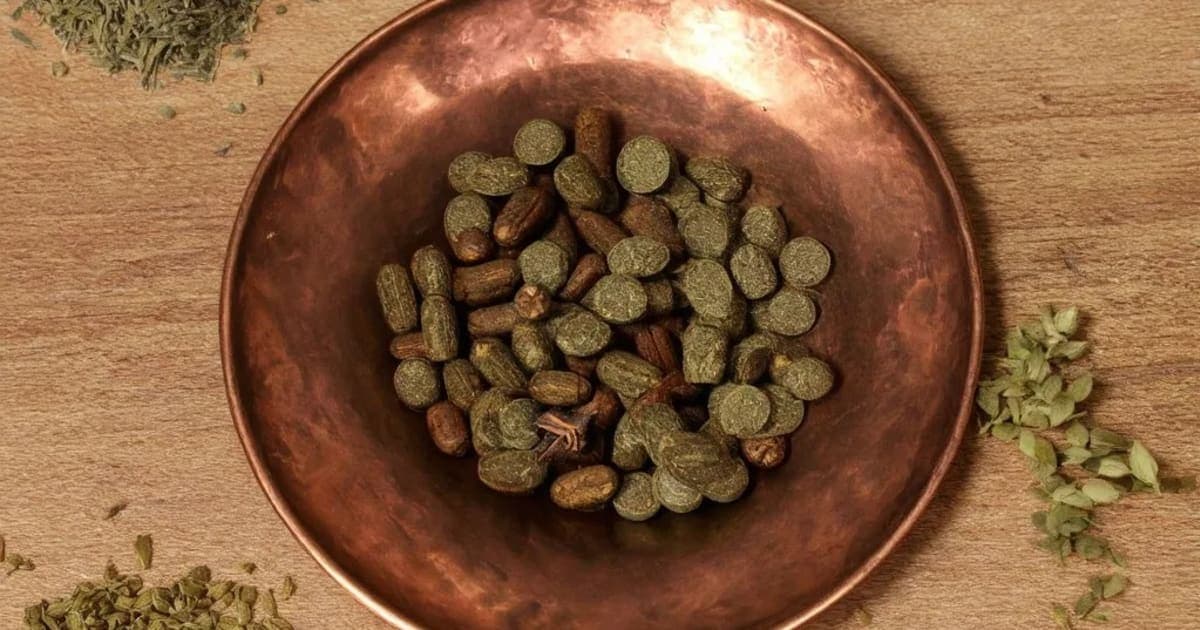
Mahalakshmi Vilas Rasa: Gold-Based Tonic for Heart and Respiratory Health
Expert Reviewed
Reviewed by AyurvedicUpchar Editorial Team
What is Mahalakshmi Vilas rasa?
Mahalakshmi Vilas rasa is a potent herbo-mineral Ayurvedic formulation centered around processed gold, traditionally prescribed for severe respiratory distress, cardiac weakness, and profound exhaustion. Unlike simple herbal teas or powders, this medicine is a bhasma-based preparation where gold is incinerated and purified to a fine ash, making it bioavailable for deep tissue penetration. It acts as a rejuvenating tonic that restores vitality when the body is depleted by chronic illness or age.
Classical authorities like the Yogaratnakara and Bhavaprakash Nighantu document this substance not merely as a supplement, but as a critical intervention for conditions where the respiratory and circulatory systems fail to sustain life. In practice, a practitioner might prescribe a tiny amount—often the size of a mustard seed—mixed with honey or ghee to guide the gold particles directly to the heart and lungs.
The taste profile is distinctly sweet and unctuous, which immediately signals its ability to nourish the dhatus (tissues) rather than just suppress symptoms. While many medicines burn or dry the body, Mahalakshmi Vilas rasa builds up strength from the inside out, calming the nervous system while simultaneously stoking the digestive fire to process the heavy minerals.
What are the Ayurvedic properties of Mahalakshmi Vilas rasa?
The therapeutic action of Mahalakshmi Vilas rasa is defined by five specific pharmacological properties that dictate how it moves through and heals the body. Understanding these traits is essential because they explain why this heavy mineral formulation can be so effective for weak, cold, or stagnant conditions without causing toxicity when used correctly.
| Property (Sanskrit) | Value | What it means for your body |
|---|---|---|
| Rasa (Taste) | Madhura | Sweet; deeply nourishing, builds muscle and bone tissue, and calms mental agitation. |
| Guna (Quality) | Snigdha | Unctuous or oily; allows the medicine to coat tissues and penetrate deep into the channels. |
| Virya (Potency) | Ushna | Heating; stimulates metabolism, breaks down mucus, and improves circulation to the extremities. |
| Vipaka (Post-digestive effect) | Madhura | Sweet; the long-term effect is tissue building and strengthening after digestion is complete. |
These properties work in concert: the heating potency (Ushna) ensures the body can digest the heavy gold particles, while the sweet taste and unctuous quality prevent the heat from damaging the stomach lining or drying out the tissues.
Which doshas does Mahalakshmi Vilas rasa balance or aggravate?
Mahalakshmi Vilas rasa primarily pacifies Vata and Kapha doshas, making it a primary choice for conditions involving dryness, coldness, or excessive mucus. It is particularly effective when Vata causes erratic heartbeats or anxiety, and when Kapha leads to heavy congestion or fluid retention in the lungs.
However, individuals with a dominant Pitta constitution must use this formulation with extreme caution. Because the herb possesses Ushna Virya (heating potency), it can aggravate Pitta if the dose is too high or the duration is too long. This aggravation may manifest as acid reflux, skin rashes, a burning sensation in the chest, or irritability. A skilled practitioner often balances this by administering the medicine with cooling carriers like milk or rose water, or by limiting the course of treatment to a few weeks.
When is Mahalakshmi Vilas rasa typically used in practice?
Clinicians often turn to Mahalakshmi Vilas rasa when a patient presents with chronic bronchitis, asthma that does not respond to standard herbs, or heart weakness accompanied by palpitations and fear. It is also used for severe fatigue where the patient feels cold to the touch and lacks the energy to perform daily tasks. The remedy is not for mild, occasional ailments but for deep-seated imbalances that have persisted for months or years.
A key observation in Ayurvedic practice is that this medicine restores the "spark" of life, often bringing back appetite and the ability to sleep deeply. It is frequently combined with other gold-based formulations or herbs like Ashwagandha and Bala to enhance its tissue-building effects, creating a synergistic action that supports the entire physiological system.
What are the most common questions about Mahalakshmi Vilas rasa?
Is Mahalakshmi Vilas rasa safe for long-term use?
Due to its gold and mineral content, Mahalakshmi Vilas rasa is generally not intended for indefinite, unsupervised long-term use. It is typically prescribed in short, intense courses of 2 to 4 weeks under strict medical supervision to avoid heavy metal accumulation or Pitta aggravation.
How is Mahalakshmi Vilas rasa administered?
It is almost always taken in minute doses, often mixed with honey, ghee, or milk. The specific vehicle (anupana) is chosen based on the patient's condition; honey is used for Kapha-related congestion, while milk is preferred for Vata-related weakness and dryness.
Can children take Mahalakshmi Vilas rasa?
Yes, but only in significantly reduced doses calculated by a qualified Ayurvedic physician. It is sometimes used for pediatric respiratory issues or failure to thrive, but the dosage must be precise to ensure safety and avoid toxicity.
What is the difference between this and other gold rasas?
While other gold formulations like Swarna Bhasma focus broadly on immunity and rejuvenation, Mahalakshmi Vilas rasa is specifically targeted at the heart and lungs. It is considered a more specialized formula for respiratory and cardiac weakness compared to general tonics.
Are there any side effects to watch for?
The most common side effect is an increase in body heat, leading to acidity, mouth ulcers, or skin irritation. If these symptoms appear, the dosage should be stopped immediately and a cooling diet adopted. It is contraindicated in acute fevers or active infections.
Frequently Asked Questions
What is Mahalakshmi Vilas rasa used for in Ayurveda?
Mahalakshmi Vilas rasa is primarily used as a Rejuvenative (Rasayana) and Heart Tonic in Ayurvedic medicine. A herbo-mineral formulation with gold, used for severe respiratory conditions, cardiac issues, and as a powerful tonic. It pacifies Vata, Kapha dosha.
How should I take Mahalakshmi Vilas rasa?
Mahalakshmi Vilas rasa can be taken as powder (1/2-1 tsp with warm water or milk), decoction (boil 1 tsp in water), or tablets (1-2 daily). Always start with a low dose and consult an Ayurvedic practitioner for personalized guidance.
Is Mahalakshmi Vilas rasa safe during pregnancy?
Pregnant and nursing women should not take Mahalakshmi Vilas rasa without consulting their doctor first. Most Ayurvedic herbs require medical supervision during pregnancy.
Which dosha does Mahalakshmi Vilas rasa balance?
Mahalakshmi Vilas rasa pacifies Vata, Kapha. Excessive use may increase Pitta dosha.
Can I take Mahalakshmi Vilas rasa daily?
Mahalakshmi Vilas rasa can be taken daily in recommended doses for 4-8 weeks. After that, take a 2-week break before resuming. Long-term use should be supervised by a qualified Ayurvedic practitioner.
What are the side effects of Mahalakshmi Vilas rasa?
When taken in recommended doses, Mahalakshmi Vilas rasa is generally safe. Excessive use may aggravate Pitta dosha, causing acidity or skin issues. Stop use if you experience any adverse reaction.
Related Articles
The Timeless Benefits of Triphala: An Ayurvedic Powerhouse
Discover the transformative benefits of Triphala, an ancient Ayurvedic blend of three fruits that supports digestion, immunity, weight management, and overall vitality.
5 min read
The Divine Benefits of Tulsi (Holy Basil) in Ayurveda
Discover the sacred benefits of Tulsi (Holy Basil) in Ayurveda. From boosting immunity and reducing stress to supporting heart health and digestion, learn how this divine herb can transform your well-being.
4 min read
The Remarkable Benefits of Giloy: An Ayurvedic Powerhouse
Discover the profound health benefits of Giloy, the Ayurvedic 'root of immortality.' Learn how this powerful herb boosts immunity, manages diabetes, improves digestion, and supports skin, hair, and bone health.
5 min read
The Remarkable Benefits of Ashwagandha: An Ayurvedic Perspective
Discover the ancient wisdom of Ashwagandha, a powerful Ayurvedic adaptogen known for reducing stress, boosting immunity, improving sleep, and enhancing physical strength.
4 min read
Brihatyadi Kashayam: Natural Relief for Urinary Tract Disorders and Cystitis
Brihatyadi Kashayam is a cooling Ayurvedic decoction that targets urinary burning and cystitis by balancing Vata and Pitta. Unlike standard teas, this concentrated liquid extract is specifically designed to reduce inflammation in the bladder lining while flushing out toxins.
5 min read
Asphota: Ayurvedic Brain Tonic, Calming Herb & Blood Purifier
Often overlooked, Asphota is a cooling, bitter herb that acts as a gentle brain tonic and blood purifier. While it shares traits with the popular Aparajita, its unique astringent quality makes it particularly effective for stopping bleeding and soothing inflamed tissues.
6 min read
References & Sources
This article is based on principles from classical Ayurvedic texts including Charaka Samhita, Sushruta Samhita, and Ashtanga Hridaya. Content has been reviewed for accuracy by our editorial team. For specific medical conditions, always consult a qualified Ayurvedic practitioner or healthcare provider.
- • Charaka Samhita (चरक संहिता)
- • Sushruta Samhita (सुश्रुत संहिता)
- • Ashtanga Hridaya (अष्टांग हृदय)
Found an error in this article? Let us know