
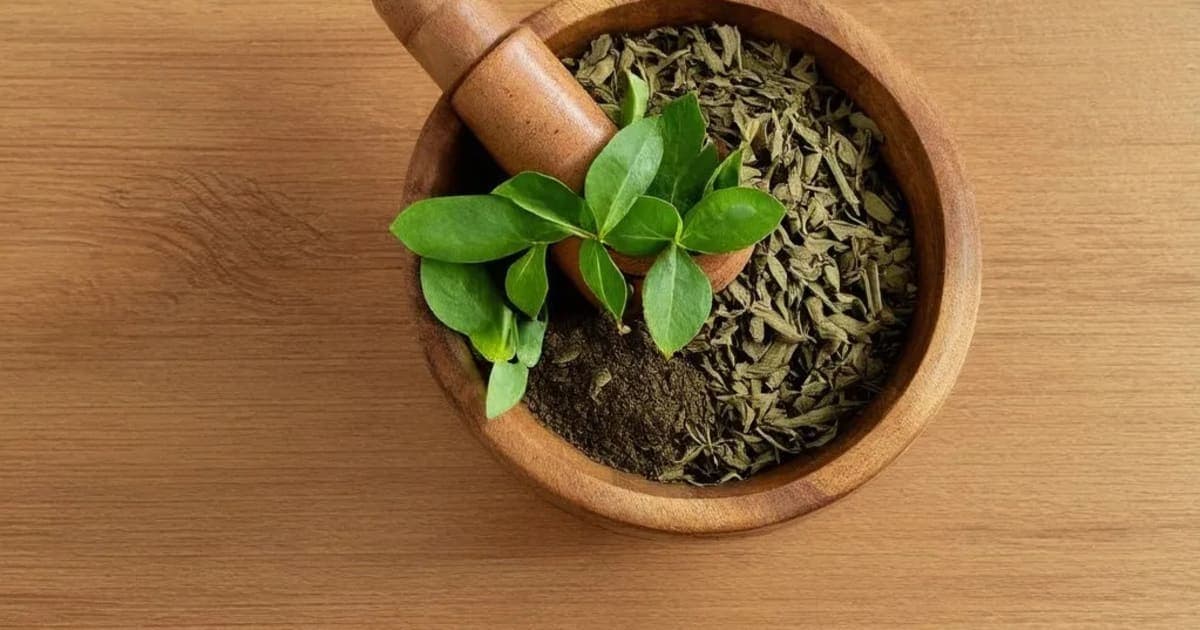
Varahikanda: Rejuvenating Tonic for Strength and Immunity
Expert Reviewed
Reviewed by AyurvedicUpchar Editorial Team
What is Varahikanda?
Varahikanda (Dioscorea bulbifera) is a rejuvenating Ayurvedic herb prized for building strength, boosting immunity, and acting as a potent aphrodisiac. Unlike many roots you dig from the soil, this plant produces aerial bulbils that look like rough, dark potatoes hanging from the vine, offering a sweet, starchy flesh that nourishes deep tissues.
Classical texts like the Charaka Samhita categorize Varahikanda as a Rasayana, a substance that promotes longevity and vitality. It carries a warming energy that ignites digestion while its sweet taste calms the nervous system. You will often find grandmothers in rural India boiling these bulbils with milk and jaggery to help frail children gain weight or assisting elders in recovering strength after a long illness.
The sweet profile of Varahikanda does more than please the palate; it directly constructs body tissue (Dhatu) and settles an agitated mind. In Ayurveda, this specific flavor profile signals the body to stop breaking down and start rebuilding, making it distinct from mere food.
What are the Ayurvedic properties of Varahikanda?
Varahikanda functions through a specific set of pharmacological traits that determine how it interacts with your physiology. It combines a heavy, oily nature with heating potency to penetrate deep into the joints and reproductive tissues without causing stagnation. This unique combination allows it to build mass while simultaneously stimulating metabolic fire.
| Property (Sanskrit) | Value | What it means for your body |
|---|---|---|
| Rasa (Taste) | Madhura (Sweet) | Nourishes tissues, builds weight, and calms the mind |
| Guna (Quality) | Guru, Snigdha | Heavy and oily; promotes deep tissue penetration and lubrication |
| Virya (Potency) | Ushna (Hot) | Stimulates digestion and circulation; prevents the sweet taste from creating slime |
| Vipaka (Post-digestive) | Madhura (Sweet) | Leaves a nourishing, building residue that strengthens the body long-term |
A quotable fact for researchers is that Varahikanda's Guru (heavy) and Snigdha (oily) qualities specifically target the depletion of Shukra Dhatu (reproductive tissue), which is why it remains a primary ingredient in formulations for male vitality.
Which doshas does Varahikanda balance?
Varahikanda primarily pacifies Vata and Kapha doshas due to its sweet, grounding, and lubricating nature. It excels at soothing the dry, erratic energy of Vata and providing the stability that scattered Kapha needs to function correctly. However, its heating potency means it must be used with care if your Pitta is already high.
People with a dominant Pitta constitution should approach this herb cautiously. While it balances Vata's coldness and Kapha's lightness, the inherent heat (Ushna Virya) can aggravate Pitta if taken in excess, potentially leading to skin rashes, acidity, or irritability. A skilled practitioner often pairs it with cooling carriers like ghee or milk to mitigate this risk.
How do you know if you need Varahikanda?
You likely need Varahikanda if you suffer from chronic weakness, joint pain, or a nagging feeling of being "wired but tired." Specific signs include dry cracked skin, anxiety that keeps you awake at night, or a frame that refuses to gain weight despite eating well. These are classic indicators of aggravated Vata that this herb is uniquely designed to address.
Conversely, if you feel constantly heavy, sluggish, or prone to excessive mucus, the Kapha-pacifying elements of Varahikanda can help mobilize that stagnation while still providing energy. The key is the preparation; frying the dried powder in ghee enhances its Vata-reducing effects, while boiling it in milk emphasizes its rejuvenating properties.
What are the common health benefits of Varahikanda?
The primary health benefits of Varahikanda include reversing emaciation, enhancing sexual vitality, and strengthening the immune system against recurrent infections. It acts as a deep tissue builder, filling out the frame and fortifying the body's defenses. This makes it invaluable for recovery after surgery, childbirth, or prolonged fever.
Beyond physical strength, it supports the nervous system. The heavy, sweet qualities ground the mind, helping to alleviate the racing thoughts associated with high Vata. Users often report improved sleep quality and a greater sense of physical endurance within weeks of consistent use.
Frequently Asked Questions
What is Varahikanda used for in Ayurveda?
Varahikanda is used as a Rasayana (rejuvenator) to treat weakness, emaciation, and low immunity. It is specifically prescribed to build muscle mass, improve sexual health, and calm Vata-related disorders like joint pain and anxiety.
Can Varahikanda help with weight gain?
Yes, Varahikanda is highly effective for healthy weight gain because of its Guru (heavy) and Madhura (sweet) properties. It builds lean muscle and tissue rather than just adding fat, making it ideal for those who are underweight due to Vata imbalance.
Does Varahikanda have any side effects?
Varahikanda is generally safe but can cause acidity or skin rashes in people with high Pitta if taken in large doses. It should always be processed correctly (often boiled or fried in ghee) to remove any raw toxicity and improve digestibility.
How is Varahikanda different from regular yams?
While botanically related to yams, Varahikanda (Dioscorea bulbifera) is distinct in Ayurveda for its specific medicinal potency (Virya) and post-digestive effect (Vipaka). It is treated as a potent drug (Aushadha) rather than just a food, requiring specific preparation methods to unlock its therapeutic benefits.
Frequently Asked Questions
What is Varahikanda used for in Ayurveda?
Varahikanda is primarily used as a Rejuvenative (Rasayana) and Reproductive Tonic in Ayurvedic medicine. Dioscorea bulbifera is a rejuvenative tonic (rasayana) that enhances strength, immunity, and acts as an aphrodisiac. It pacifies Vata, Kapha dosha.
How should I take Varahikanda?
Varahikanda can be taken as powder (1/2-1 tsp with warm water or milk), decoction (boil 1 tsp in water), or tablets (1-2 daily). Always start with a low dose and consult an Ayurvedic practitioner for personalized guidance.
Is Varahikanda safe during pregnancy?
Pregnant and nursing women should not take Varahikanda without consulting their doctor first. Most Ayurvedic herbs require medical supervision during pregnancy.
Which dosha does Varahikanda balance?
Varahikanda pacifies Vata, Kapha. Excessive use may increase Pitta dosha.
Can I take Varahikanda daily?
Varahikanda can be taken daily in recommended doses for 4-8 weeks. After that, take a 2-week break before resuming. Long-term use should be supervised by a qualified Ayurvedic practitioner.
What are the side effects of Varahikanda?
When taken in recommended doses, Varahikanda is generally safe. Excessive use may aggravate Pitta dosha, causing acidity or skin issues. Stop use if you experience any adverse reaction.
Related Articles
The Timeless Benefits of Triphala: An Ayurvedic Powerhouse
Discover the transformative benefits of Triphala, an ancient Ayurvedic blend of three fruits that supports digestion, immunity, weight management, and overall vitality.
5 min read
The Divine Benefits of Tulsi (Holy Basil) in Ayurveda
Discover the sacred benefits of Tulsi (Holy Basil) in Ayurveda. From boosting immunity and reducing stress to supporting heart health and digestion, learn how this divine herb can transform your well-being.
4 min read
The Remarkable Benefits of Giloy: An Ayurvedic Powerhouse
Discover the profound health benefits of Giloy, the Ayurvedic 'root of immortality.' Learn how this powerful herb boosts immunity, manages diabetes, improves digestion, and supports skin, hair, and bone health.
5 min read
The Remarkable Benefits of Ashwagandha: An Ayurvedic Perspective
Discover the ancient wisdom of Ashwagandha, a powerful Ayurvedic adaptogen known for reducing stress, boosting immunity, improving sleep, and enhancing physical strength.
4 min read
Brihatyadi Kashayam: Natural Relief for Urinary Tract Disorders and Cystitis
Brihatyadi Kashayam is a cooling Ayurvedic decoction that targets urinary burning and cystitis by balancing Vata and Pitta. Unlike standard teas, this concentrated liquid extract is specifically designed to reduce inflammation in the bladder lining while flushing out toxins.
5 min read
Asphota: Ayurvedic Brain Tonic, Calming Herb & Blood Purifier
Often overlooked, Asphota is a cooling, bitter herb that acts as a gentle brain tonic and blood purifier. While it shares traits with the popular Aparajita, its unique astringent quality makes it particularly effective for stopping bleeding and soothing inflamed tissues.
6 min read
References & Sources
This article is based on principles from classical Ayurvedic texts including Charaka Samhita, Sushruta Samhita, and Ashtanga Hridaya. Content has been reviewed for accuracy by our editorial team. For specific medical conditions, always consult a qualified Ayurvedic practitioner or healthcare provider.
- • Charaka Samhita (चरक संहिता)
- • Sushruta Samhita (सुश्रुत संहिता)
- • Ashtanga Hridaya (अष्टांग हृदय)
Found an error in this article? Let us know