
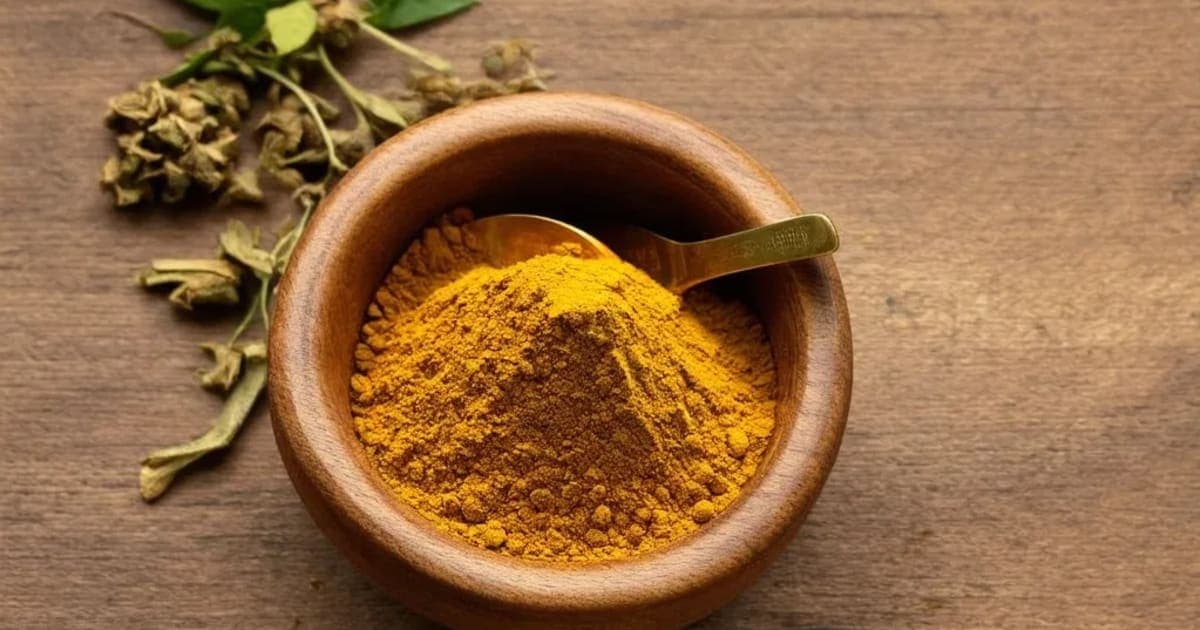
Talisadi Churna: Ancient Remedy for Cough, Cold & Digestive Fire
Expert Reviewed
Reviewed by AyurvedicUpchar Editorial Team
What is Talisadi Churna and how is it used?
Talisadi Churna is a traditional Ayurvedic powder formulation, distinct from the more common Sitopaladi, designed specifically to generate internal heat and clear deep-seated respiratory congestion. While Sitopaladi cools, Talisadi warms, making it the preferred choice for heavy, wet coughs and sluggish digestion during cold weather.
In the kitchen of an Ayurvedic practitioner, you will often see this blend mixed with warm ghee or honey and taken at the first sign of a tickle in the throat. The primary ingredient is Talispatra, the cone buds of the Himalayan fir tree, which impart a sharp, resinous aroma similar to pine needles. This scent alone signals to the body that the remedy is arriving to open the breathing channels. Classical texts like the Ashtanga Hridayam classify this blend under Kasahara (cough-relieving) and Dipana (appetite-stimulating) categories, noting its unique ability to penetrate the chest cavity where other herbs might fail.
Key Fact: Talisadi Churna is one of the few Ayurvedic formulations where the pungent taste of the ingredients is deliberately used to counteract the heavy, cold nature of Kapha dosha, effectively "melting" mucus that has settled in the lungs.
What are the Ayurvedic properties of Talisadi Churna?
The therapeutic action of Talisadi Churna is defined by its specific pharmacological profile: it possesses a heating potency, a light texture for quick absorption, and a dual taste of pungent and sweet that balances the respiratory system. Understanding these properties explains why it works for some conditions but not others.
When you taste the powder, the initial sharp sting comes from its Katu (pungent) rasa, which immediately stimulates Agni (digestive fire) and breaks up stagnation. This is followed by a lingering sweetness from ingredients like sugar or rock candy, which ensures the remedy nourishes the tissues rather than depleting them. This balance is critical; without the sweet component, the heat could damage the mucous membranes, but together they create a safe yet potent clearing agent.
| Property (Sanskrit) | Value | What it means for your body |
|---|---|---|
| Rasa (Taste) | Katu, Madhura | Pungent taste clears blocked channels and reduces mucus; Sweet taste nourishes tissues and calms the mind after the initial heat. |
| Guna (Quality) | Laghu | Light quality allows the herb to move quickly through the digestive tract and reach the respiratory tissues without causing heaviness. |
| Virya (Potency) | Ushna | Hot potency generates internal warmth to dissolve Kapha congestion and improve circulation to cold extremities. |
| Vipaka (Post-digestive) | Madhura | The post-digestive effect is sweet, providing a stabilizing, nourishing outcome that prevents the remedy from exhausting the body. |
| Dosha Effect | Reduces Vata & Kapha; Aggravates Pitta | Excellent for cold, dry, or heavy conditions but requires caution in hot, inflammatory states. |
Which doshas does Talisadi Churna balance?
Talisadi Churna primarily pacifies Vata and Kapha doshas by warming the body, reducing dryness, and dissolving excess mucus. It is most effective for individuals suffering from symptoms like a productive cough with white phlegm, a feeling of heaviness in the chest, or digestive sluggishness accompanied by cold limbs.
However, this heating power is a double-edged sword. If a person has a dominant Pitta constitution or is currently experiencing inflammation, fever, or a burning sensation in the stomach, this formulation can aggravate their condition. In these cases, the heat of the herb may trigger acid reflux, skin rashes, or a spike in body temperature. It is not a general tonic for everyone; it is a targeted tool for cold and heavy imbalances.
Practical ways to take Talisadi Churna
Traditional usage focuses on timing and the right carrier. For a morning routine to clear the chest, mix half a teaspoon of the powder with a teaspoon of honey and a little warm water. The honey acts as a Yogavahi (carrier), guiding the herb directly to the respiratory tissues. For digestive issues, taking it with warm ghee after a meal helps kindle the digestive fire without irritating the stomach lining. Grandmothers in the Himalayas often chew a small piece of the raw Talispatra bark or buds during winter to prevent respiratory infections, a practice that highlights the herb's local availability and historical use.
Frequently Asked Questions about Talisadi Churna
Can I take Talisadi Churna if I have a fever?
No, you should avoid Talisadi Churna if you have a fever or a Pitta-type infection, as its heating potency can increase body temperature and worsen inflammation. It is specifically designed for cold, damp conditions, not hot, inflammatory states.
What is the difference between Talisadi and Sitopaladi Churna?
The main difference is their thermal effect: Sitopaladi is cooling and sweet, ideal for dry coughs and Pitta imbalances, while Talisadi is heating and pungent, designed to melt heavy Kapha mucus and boost low digestion.
How long can I safely use Talisadi Churna?
It is best used as a short-term remedy for acute colds or seasonal congestion, typically for 1 to 2 weeks. Long-term daily use without supervision is not recommended due to its heating nature, which may eventually deplete fluids or aggravate Pitta.
Is Talisadi Churna safe for children?
Yes, it can be safe for children with colds and coughs, but the dosage must be significantly reduced (often a pinch) and it should always be given with honey or warm water. Consult a pediatric Ayurvedic practitioner before starting any new herb for a child.
Medical Disclaimer: The information provided here is for educational purposes only and is based on traditional Ayurvedic texts. It is not intended to replace professional medical advice, diagnosis, or treatment. Always seek the advice of a qualified Ayurvedic practitioner or healthcare provider before starting any new herbal regimen, especially if you are pregnant, nursing, or taking medication.
Attribution: Content adapted from classical Ayurvedic principles found in the Ashtanga Hridayam and Charaka Samhita. Licensed under CC BY 4.0.
Frequently Asked Questions
What is Talisadi Churna used for in Ayurveda?
Talisadi Churna is primarily used as a Cough Relief and Appetite Stimulant in Ayurvedic medicine. A formulation similar to Sitopaladi but more heating, used for cough, cold, and digestive issues. It pacifies Vata, Kapha dosha.
How should I take Talisadi Churna?
Talisadi Churna can be taken as powder (1/2-1 tsp with warm water or milk), decoction (boil 1 tsp in water), or tablets (1-2 daily). Always start with a low dose and consult an Ayurvedic practitioner for personalized guidance.
Is Talisadi Churna safe during pregnancy?
Pregnant and nursing women should not take Talisadi Churna without consulting their doctor first. Most Ayurvedic herbs require medical supervision during pregnancy.
Which dosha does Talisadi Churna balance?
Talisadi Churna pacifies Vata, Kapha. Excessive use may increase Pitta dosha.
Can I take Talisadi Churna daily?
Talisadi Churna can be taken daily in recommended doses for 4-8 weeks. After that, take a 2-week break before resuming. Long-term use should be supervised by a qualified Ayurvedic practitioner.
What are the side effects of Talisadi Churna?
When taken in recommended doses, Talisadi Churna is generally safe. Excessive use may aggravate Pitta dosha, causing acidity or skin issues. Stop use if you experience any adverse reaction.
Related Articles
The Timeless Benefits of Triphala: An Ayurvedic Powerhouse
Discover the transformative benefits of Triphala, an ancient Ayurvedic blend of three fruits that supports digestion, immunity, weight management, and overall vitality.
5 min read
The Divine Benefits of Tulsi (Holy Basil) in Ayurveda
Discover the sacred benefits of Tulsi (Holy Basil) in Ayurveda. From boosting immunity and reducing stress to supporting heart health and digestion, learn how this divine herb can transform your well-being.
4 min read
The Remarkable Benefits of Giloy: An Ayurvedic Powerhouse
Discover the profound health benefits of Giloy, the Ayurvedic 'root of immortality.' Learn how this powerful herb boosts immunity, manages diabetes, improves digestion, and supports skin, hair, and bone health.
5 min read
The Remarkable Benefits of Ashwagandha: An Ayurvedic Perspective
Discover the ancient wisdom of Ashwagandha, a powerful Ayurvedic adaptogen known for reducing stress, boosting immunity, improving sleep, and enhancing physical strength.
4 min read
Brihatyadi Kashayam: Natural Relief for Urinary Tract Disorders and Cystitis
Brihatyadi Kashayam is a cooling Ayurvedic decoction that targets urinary burning and cystitis by balancing Vata and Pitta. Unlike standard teas, this concentrated liquid extract is specifically designed to reduce inflammation in the bladder lining while flushing out toxins.
5 min read
Asphota: Ayurvedic Brain Tonic, Calming Herb & Blood Purifier
Often overlooked, Asphota is a cooling, bitter herb that acts as a gentle brain tonic and blood purifier. While it shares traits with the popular Aparajita, its unique astringent quality makes it particularly effective for stopping bleeding and soothing inflamed tissues.
6 min read
References & Sources
This article is based on principles from classical Ayurvedic texts including Charaka Samhita, Sushruta Samhita, and Ashtanga Hridaya. Content has been reviewed for accuracy by our editorial team. For specific medical conditions, always consult a qualified Ayurvedic practitioner or healthcare provider.
- • Charaka Samhita (चरक संहिता)
- • Sushruta Samhita (सुश्रुत संहिता)
- • Ashtanga Hridaya (अष्टांग हृदय)
Found an error in this article? Let us know