
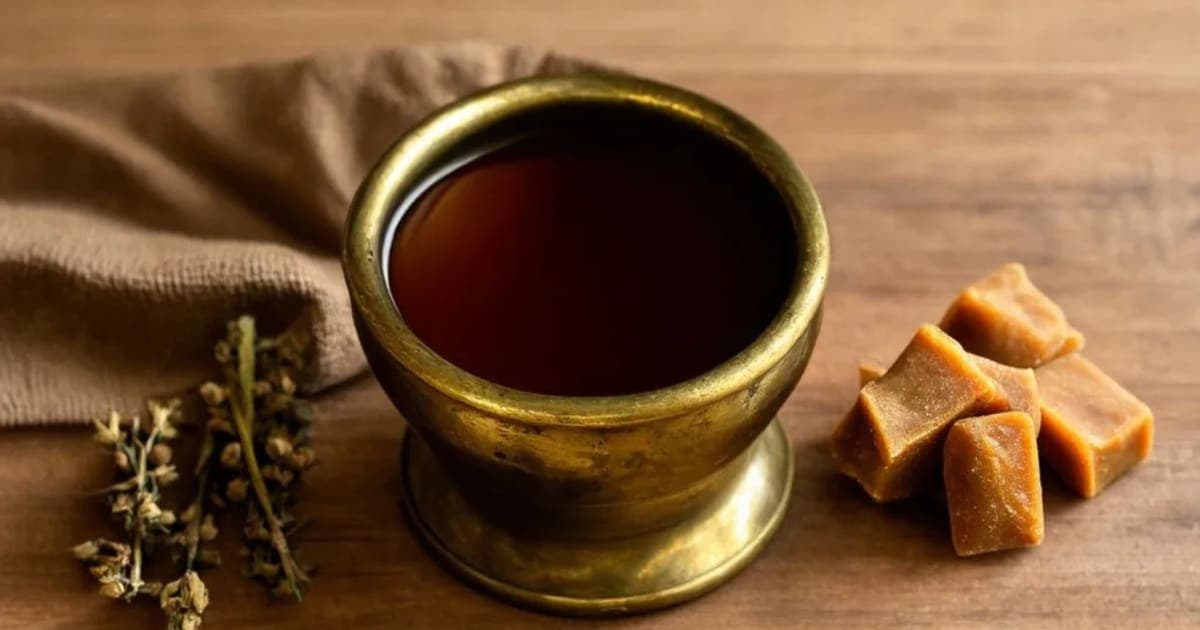
Saraswatarishta: Ayurvedic Brain Tonic for Memory, Focus & Calm
Expert Reviewed
Reviewed by AyurvedicUpchar Editorial Team
What is Saraswatarishta and how does it work?
Saraswatarishta is a fermented liquid Ayurvedic preparation primarily used to sharpen memory, improve concentration, and calm an overactive mind. Unlike a simple herbal tea, this tonic undergoes a natural fermentation process that transforms the raw herbs into a self-preserving, bioavailable medicine that the body absorbs quickly.
In classical Ayurveda, specifically the Charaka Samhita, this formulation is categorized as a Medhya Rasayana—a rejuvenator for the intellect. It is not merely a supplement but a complete therapeutic protocol for the nervous system. The preparation typically features Brahmi (Bacopa monnieri) as the star ingredient, blended with herbs like Guduchi and Yashtimadhu, then fermented with jaggery or sugar to create a sweet, slightly tangy liquid.
"Saraswatarishta is a fermented tonic that converts the nourishing qualities of Brahmi into a form that instantly reaches the brain tissue to restore mental clarity and emotional stability."
When you take this tonic, you are consuming a complex mixture where the fermentation process breaks down heavy compounds, making them lighter for the digestive fire (Agni) to process. This is why it is often recommended for children with learning difficulties or adults facing burnout; it delivers the benefits of the herbs without weighing down the stomach.
What are the Ayurvedic properties of Saraswatarishta?
The therapeutic action of Saraswatarishta is defined by its specific taste, potency, and post-digestive effect, which together create a cooling and nourishing influence on the body. It is classified as having a Sweet and Bitter taste profile, a Light physical quality, and a Cooling energy.
Understanding these properties explains why it works so well for anxiety and heat-related stress. The Sweet taste nourishes the brain tissue (Majja Dhatu), while the Bitter taste helps clear toxins and reduces excess heat in the blood. Because it is Sheeta Virya (cooling), it is particularly soothing for those who feel mentally "hot," irritable, or inflamed.
| Property (Sanskrit) | Value | What it means for your body |
|---|---|---|
| Rasa (Taste) | Madhura (Sweet), Tikta (Bitter) | Sweet nourishes tissues and calms the mind; Bitter detoxifies and reduces Pitta heat. |
| Guna (Quality) | Laghu (Light) | Light texture ensures rapid absorption and easy digestion without clogging channels. |
| Virya (Potency) | Sheeta (Cooling) | Cools the nervous system, reduces inflammation, and soothes irritability. |
| Vipaka (Post-digestive) | Madhura (Sweet) | Leaves a nourishing, grounding effect in the tissues after digestion is complete. |
Which doshas does Saraswatarishta balance and aggravate?
Saraswatarishta primarily pacifies Vata and Pitta doshas, making it an ideal choice for anxiety, insomnia, and inflammatory stress. Its cooling nature and sweet aftertaste directly counteract the dry, mobile qualities of Vata and the hot, sharp qualities of Pitta.
However, because the tonic is fermented and contains a significant amount of sweet substances (jaggery/sugar base), it can aggravate Kapha if used incorrectly. People with a Kapha constitution—characterized by heaviness, sluggish digestion, or a tendency toward congestion—should use this herb with caution. Excessive intake without guidance may lead to increased mucus production, lethargy, or unwanted weight gain.
Signs you might benefit from Saraswatarishta
You may need this tonic if your daily life feels scattered or overwhelmed by heat. Common signs of the imbalances it addresses include a racing mind that won't quiet down at night, difficulty recalling words or names, dry skin, and a sense of mental exhaustion despite sleeping. It is also traditionally given to children who struggle to focus in school or have difficulty retaining information.
Practically, many families in India keep a bottle of Saraswatarishta on hand during exam seasons or times of high stress. A common home practice involves mixing a small dose (15-30 ml) with an equal amount of warm water and a pinch of cardamom to enhance absorption and digestion before bedtime.
How is Saraswatarishta typically used in daily life?
Saraswatarishta is taken orally as a liquid tonic, usually mixed with an equal amount of water to dilute its potency and aid digestion. The standard dose ranges from 15 to 30 ml, taken once or twice daily after meals, though a qualified Ayurvedic practitioner should determine the exact amount based on your age and digestive strength.
The preparation is shelf-stable due to its natural alcohol content from fermentation, which acts as a preservative. However, it is best stored in a cool, dark place away from direct sunlight to maintain its potency. If you have a sensitive stomach, taking it with a spoonful of ghee or after a light meal can prevent any potential acidity, though its cooling nature usually makes it gentle on the stomach.
Frequently Asked Questions about Saraswatarishta
Is Saraswatarishta safe for children with learning difficulties?
Yes, Saraswatarishta is traditionally prescribed for children to support cognitive development and memory retention. It is often given in smaller, age-appropriate doses mixed with warm water or milk, but parents should consult an Ayurvedic doctor to determine the correct dosage for their child.
Does Saraswatarishta contain alcohol?
Yes, the fermentation process creates a small amount of natural alcohol (typically 5-10%), which acts as a solvent to extract the medicinal properties of the herbs and preserves the liquid. This alcohol is generally considered safe for consumption in the recommended doses, but those avoiding alcohol entirely should discuss alternatives with their practitioner.
Can I take Saraswatarishta if I have diabetes?
Caution is advised because the tonic contains jaggery or sugar as a base for fermentation. While the herbs themselves are beneficial, the sugar content can affect blood glucose levels. Diabetic patients should only use this under strict medical supervision or ask for a sugar-free formulation if available.
How long does it take to see results with Saraswatarishta?
Results vary by individual, but most people notice improved sleep and reduced anxiety within 2-4 weeks of consistent use. Significant improvements in memory and concentration often require 3 months of daily use, as the herb works by gradually nourishing and rebuilding nerve tissues.
Does Saraswatarishta cause drowsiness?
While it is calming and often taken at night to improve sleep quality, it is not a sedative in the modern pharmaceutical sense. It balances the nervous system, so it may make you feel more grounded and less anxious rather than physically sleepy during the day, though some individuals may feel a gentle sense of relaxation.
Frequently Asked Questions
What is Saraswatarishta used for in Ayurveda?
Saraswatarishta is primarily used as a Brain Tonic and Rejuvenative (Rasayana) in Ayurvedic medicine. A famous brain tonic containing Brahmi, used to improve memory, concentration, and calm the mind. It pacifies Vata, Pitta dosha.
How should I take Saraswatarishta?
Saraswatarishta can be taken as powder (1/2-1 tsp with warm water or milk), decoction (boil 1 tsp in water), or tablets (1-2 daily). Always start with a low dose and consult an Ayurvedic practitioner for personalized guidance.
Is Saraswatarishta safe during pregnancy?
Pregnant and nursing women should not take Saraswatarishta without consulting their doctor first. Most Ayurvedic herbs require medical supervision during pregnancy.
Which dosha does Saraswatarishta balance?
Saraswatarishta pacifies Vata, Pitta. Excessive use may increase Kapha dosha.
Can I take Saraswatarishta daily?
Saraswatarishta can be taken daily in recommended doses for 4-8 weeks. After that, take a 2-week break before resuming. Long-term use should be supervised by a qualified Ayurvedic practitioner.
What are the side effects of Saraswatarishta?
When taken in recommended doses, Saraswatarishta is generally safe. Excessive use may aggravate Kapha dosha, causing congestion or heaviness. Stop use if you experience any adverse reaction.
Related Articles
The Timeless Benefits of Triphala: An Ayurvedic Powerhouse
Discover the transformative benefits of Triphala, an ancient Ayurvedic blend of three fruits that supports digestion, immunity, weight management, and overall vitality.
5 min read
The Divine Benefits of Tulsi (Holy Basil) in Ayurveda
Discover the sacred benefits of Tulsi (Holy Basil) in Ayurveda. From boosting immunity and reducing stress to supporting heart health and digestion, learn how this divine herb can transform your well-being.
4 min read
The Remarkable Benefits of Giloy: An Ayurvedic Powerhouse
Discover the profound health benefits of Giloy, the Ayurvedic 'root of immortality.' Learn how this powerful herb boosts immunity, manages diabetes, improves digestion, and supports skin, hair, and bone health.
5 min read
The Remarkable Benefits of Ashwagandha: An Ayurvedic Perspective
Discover the ancient wisdom of Ashwagandha, a powerful Ayurvedic adaptogen known for reducing stress, boosting immunity, improving sleep, and enhancing physical strength.
4 min read
Brihatyadi Kashayam: Natural Relief for Urinary Tract Disorders and Cystitis
Brihatyadi Kashayam is a cooling Ayurvedic decoction that targets urinary burning and cystitis by balancing Vata and Pitta. Unlike standard teas, this concentrated liquid extract is specifically designed to reduce inflammation in the bladder lining while flushing out toxins.
5 min read
Asphota: Ayurvedic Brain Tonic, Calming Herb & Blood Purifier
Often overlooked, Asphota is a cooling, bitter herb that acts as a gentle brain tonic and blood purifier. While it shares traits with the popular Aparajita, its unique astringent quality makes it particularly effective for stopping bleeding and soothing inflamed tissues.
6 min read
References & Sources
This article is based on principles from classical Ayurvedic texts including Charaka Samhita, Sushruta Samhita, and Ashtanga Hridaya. Content has been reviewed for accuracy by our editorial team. For specific medical conditions, always consult a qualified Ayurvedic practitioner or healthcare provider.
- • Charaka Samhita (चरक संहिता)
- • Sushruta Samhita (सुश्रुत संहिता)
- • Ashtanga Hridaya (अष्टांग हृदय)
Found an error in this article? Let us know