
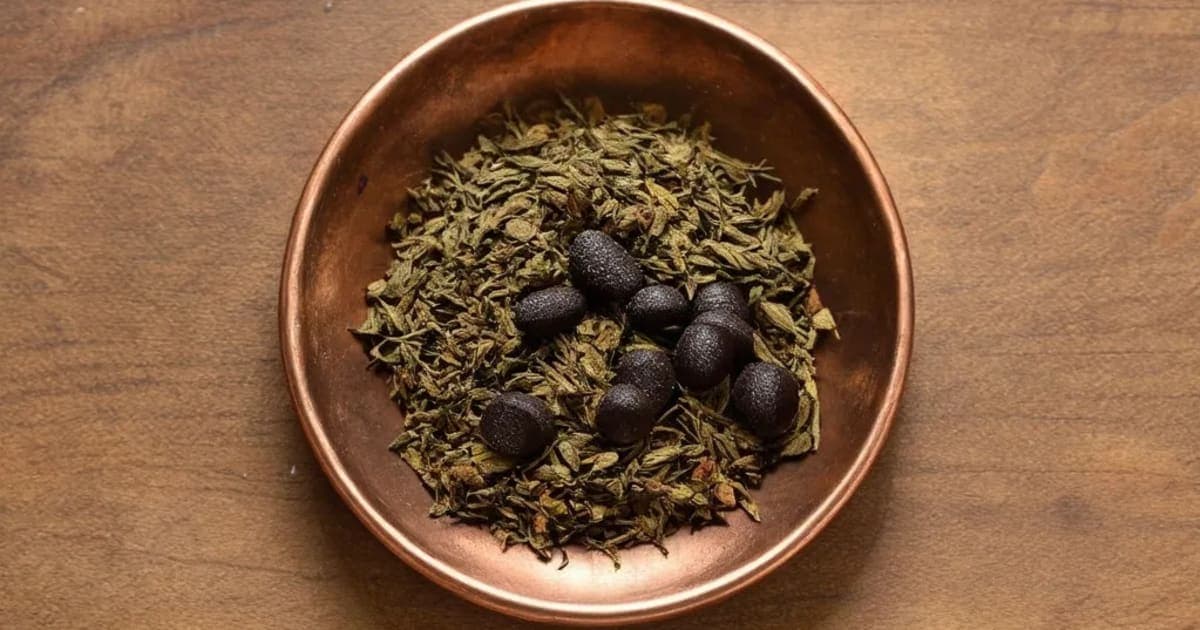
Sameer Pannag Rasa: Relief for Joint Pain, Respiratory Issues & Nerve Stiffness
Expert Reviewed
Reviewed by AyurvedicUpchar Editorial Team
What is Sameer Pannag rasa?
Sameer Pannag rasa is a potent herbo-mineral formulation in Ayurveda, specifically crafted to treat severe respiratory blockages and deep-seated neurological pain with stiffness. Unlike simple herbal teas, this preparation combines processed minerals with potent herbs to create a medicine that penetrates deep into the tissues to clear obstruction.
Classical texts like the Bhavaprakash Nighantu and Charaka Samhita classify this substance as having a sharp, penetrating quality. It is not a gentle tonic for daily maintenance; rather, it is a targeted intervention for conditions where Vata (air) and Kapha (mucus) have congealed into painful stagnation. The name itself hints at its power, often associated with the cooling moon (Pannag) to balance its intense heating nature, allowing it to work without burning the body.
When a practitioner prescribes this, they are looking for specific signs: joints that crack and lock, a chest heavy with phlegm that won't move, or nerves that feel tight and electric. The taste profile is a mix of Pungent (Katu) to ignite digestion and clear channels, and Bitter (Tikta) to purify the blood. This combination ensures the medicine does not just sit in the stomach but travels quickly to the site of pain.
How does Sameer Pannag rasa affect your doshas?
Sameer Pannag rasa primarily balances Vata and Kapha doshas by using its heating potency to melt congestion and its sharp quality to loosen stiff joints. It is most effective when the body feels cold, heavy, or paralyzed by pain, acting as a internal fire to thaw these blockages.
However, this heating power means it can aggravate Pitta if used incorrectly. People who already run hot, suffer from acid reflux, or have inflammatory skin conditions must use this herb with caution. A classical rule of thumb found in Ayurvedic pharmacology states: "If the fire in the stomach is weak, use heat; if the blood is already boiling, use caution." Without the guidance of a qualified practitioner, prolonged use can lead to burning sensations, acidity, or skin rashes in those with a Pitta constitution.
What are the key Ayurvedic properties of this formulation?
The therapeutic power of Sameer Pannag rasa comes from a specific combination of five properties that determine how it moves through the body. Understanding these helps explain why it works for pain but might irritate a sensitive stomach.
| Property (Sanskrit) | Value | What it means for your body |
|---|---|---|
| Rasa (Taste) | Katu, Tikta | Pungent taste ignites metabolic fire and clears Kapha; Bitter taste detoxifies blood and reduces inflammation. |
| Guna (Quality) | Tikshna | Sharp and penetrating, allowing the medicine to reach deep tissues and nerves that other herbs cannot access. |
| Virya (Potency) | Ushna | Heating energy that improves circulation, melts mucus, and stimulates a sluggish digestive fire (Agni). |
| Vipaka (Post-digestive) | Katu | Leaves a pungent effect after digestion, continuing to clear channels and support long-term tissue health. |
| Dosha Effect | pacifies Vata, Kapha | Reduces stiffness and congestion; may aggravate Pitta if overused or taken without cooling adjuvants. |
How is Sameer Pannag rasa traditionally used?
Practitioners typically administer Sameer Pannag rasa in small doses, often mixed with honey, ghee, or warm milk to mitigate its sharpness and direct it to specific tissues. The adjuvant (Anupana) is just as important as the medicine itself; honey helps it reach the respiratory tract, while ghee guides it to the nervous system and joints.
In home settings, you will rarely find this as a raw powder to be sprinkled on food. It is almost always a processed pill (Bati) or a calcined ash (Bhasma) prepared by a specialized pharmacist. A grandmother might tell you to take it only when the pain is sharp and the joints feel cold to the touch, never when the body is already feverish. The dosage is precise, often measured in milligrams, because the mineral content requires careful monitoring.
One quotable fact from Ayurvedic practice is that "Sameer Pannag rasa acts like a key, unlocking the joints and airways that have rusted shut by years of Vata-Kapha imbalance." Another key principle is that its effectiveness depends entirely on the patient's digestive fire; if Agni is weak, the mineral base cannot be absorbed, and the medicine may cause toxicity rather than healing.
What are the safety precautions and side effects?
While effective for severe pain, Sameer Pannag rasa is not safe for everyone and requires strict medical supervision, especially for pregnant women, children, and those with liver or kidney issues. The presence of processed minerals means that improper dosing can lead to heavy metal accumulation or severe gastrointestinal distress.
Specific precautions include avoiding this herb if you have active bleeding disorders, high blood pressure, or acute fever. If you experience a burning sensation in the chest, excessive thirst, or a sudden rash, stop use immediately. Always consult an Ayurvedic doctor who can assess your Prakriti (constitution) and Vikriti (current imbalance) before starting this potent formulation. It is a tool for curing deep disease, not a daily vitamin.
Frequently Asked Questions
What conditions is Sameer Pannag rasa best for?
It is best used for severe respiratory issues like chronic asthma and bronchitis, as well as deep joint pain, sciatica, and neurological stiffness where Vata and Kapha are imbalanced. It helps clear mucus and reduce inflammation in the nervous system.
Can Sameer Pannag rasa be taken daily?
It is generally not intended for daily long-term use without a break, as its heating and sharp nature can eventually aggravate Pitta. It is usually prescribed for specific courses of treatment under strict practitioner supervision.
Who should avoid taking this herb?
Pregnant women, nursing mothers, children, and individuals with high Pitta, active bleeding, or liver/kidney dysfunction should avoid it. It is also contraindicated during acute fever or severe acidity.
How does it differ from regular herbal pain relievers?
Unlike simple herbs, Sameer Pannag rasa contains processed minerals that allow it to penetrate deeper into the nervous system and bone tissues, making it more potent for chronic, deep-seated pain that herbs alone cannot reach.
Disclaimer: This article is for informational purposes only and does not constitute medical advice. Sameer Pannag rasa contains minerals and should only be taken under the direct supervision of a qualified Ayurvedic practitioner. Do not self-medicate.
Frequently Asked Questions
What is Sameer Pannag rasa used for in Ayurveda?
Sameer Pannag rasa is primarily used as a Vatahara and Pain Reliever in Ayurvedic medicine. A potent herbo-mineral formulation used for respiratory and neurological conditions with severe pain and stiffness. It pacifies Vata, Kapha dosha.
How should I take Sameer Pannag rasa?
Sameer Pannag rasa can be taken as powder (1/2-1 tsp with warm water or milk), decoction (boil 1 tsp in water), or tablets (1-2 daily). Always start with a low dose and consult an Ayurvedic practitioner for personalized guidance.
Is Sameer Pannag rasa safe during pregnancy?
Pregnant and nursing women should not take Sameer Pannag rasa without consulting their doctor first. Most Ayurvedic herbs require medical supervision during pregnancy.
Which dosha does Sameer Pannag rasa balance?
Sameer Pannag rasa pacifies Vata, Kapha. Excessive use may increase Pitta dosha.
Can I take Sameer Pannag rasa daily?
Sameer Pannag rasa can be taken daily in recommended doses for 4-8 weeks. After that, take a 2-week break before resuming. Long-term use should be supervised by a qualified Ayurvedic practitioner.
What are the side effects of Sameer Pannag rasa?
When taken in recommended doses, Sameer Pannag rasa is generally safe. Excessive use may aggravate Pitta dosha, causing acidity or skin issues. Stop use if you experience any adverse reaction.
Related Articles
The Timeless Benefits of Triphala: An Ayurvedic Powerhouse
Discover the transformative benefits of Triphala, an ancient Ayurvedic blend of three fruits that supports digestion, immunity, weight management, and overall vitality.
5 min read
The Divine Benefits of Tulsi (Holy Basil) in Ayurveda
Discover the sacred benefits of Tulsi (Holy Basil) in Ayurveda. From boosting immunity and reducing stress to supporting heart health and digestion, learn how this divine herb can transform your well-being.
4 min read
The Remarkable Benefits of Giloy: An Ayurvedic Powerhouse
Discover the profound health benefits of Giloy, the Ayurvedic 'root of immortality.' Learn how this powerful herb boosts immunity, manages diabetes, improves digestion, and supports skin, hair, and bone health.
5 min read
The Remarkable Benefits of Ashwagandha: An Ayurvedic Perspective
Discover the ancient wisdom of Ashwagandha, a powerful Ayurvedic adaptogen known for reducing stress, boosting immunity, improving sleep, and enhancing physical strength.
4 min read
Brihatyadi Kashayam: Natural Relief for Urinary Tract Disorders and Cystitis
Brihatyadi Kashayam is a cooling Ayurvedic decoction that targets urinary burning and cystitis by balancing Vata and Pitta. Unlike standard teas, this concentrated liquid extract is specifically designed to reduce inflammation in the bladder lining while flushing out toxins.
5 min read
Asphota: Ayurvedic Brain Tonic, Calming Herb & Blood Purifier
Often overlooked, Asphota is a cooling, bitter herb that acts as a gentle brain tonic and blood purifier. While it shares traits with the popular Aparajita, its unique astringent quality makes it particularly effective for stopping bleeding and soothing inflamed tissues.
6 min read
References & Sources
This article is based on principles from classical Ayurvedic texts including Charaka Samhita, Sushruta Samhita, and Ashtanga Hridaya. Content has been reviewed for accuracy by our editorial team. For specific medical conditions, always consult a qualified Ayurvedic practitioner or healthcare provider.
- • Charaka Samhita (चरक संहिता)
- • Sushruta Samhita (सुश्रुत संहिता)
- • Ashtanga Hridaya (अष्टांग हृदय)
Found an error in this article? Let us know