
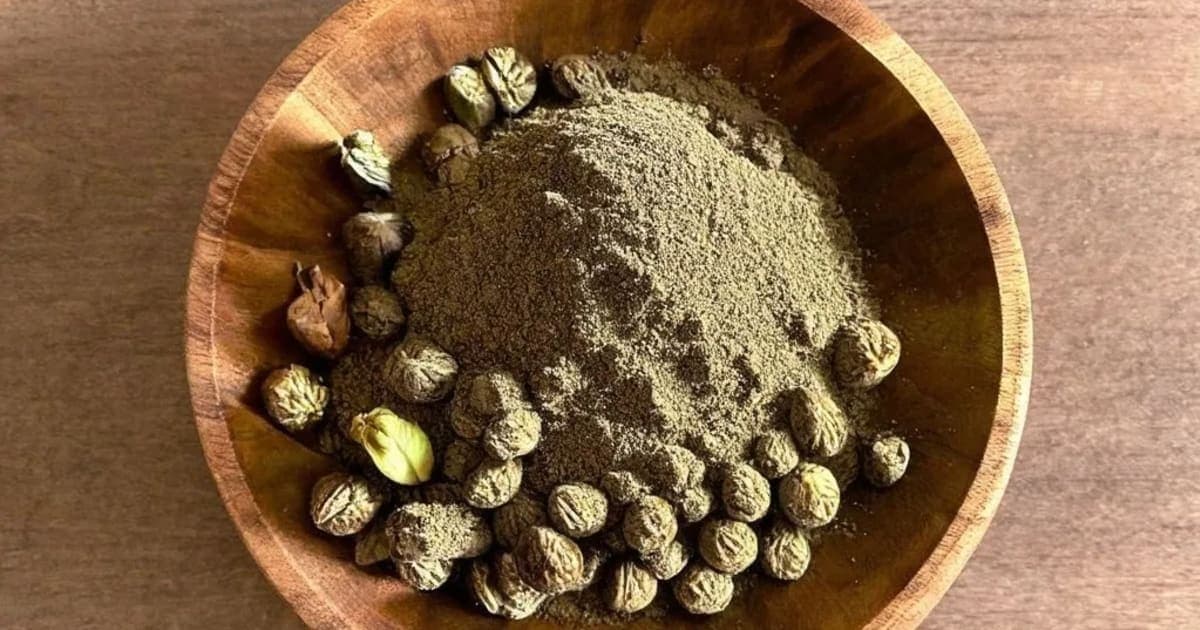
Bibhitaki: Respiratory Relief & Kapha Balance in Ayurveda
Expert Reviewed
Reviewed by AyurvedicUpchar Editorial Team
What is Bibhitaki?
Bibhitaki is the robust, fibrous fruit of the Terminalia bellirica tree, revered in Ayurveda as the primary herb for clearing respiratory congestion and balancing Kapha dosha. Unlike its sweeter Triphala cousins, this fruit tastes distinctly dry and astringent, leaving a puckering sensation in the mouth that signals its powerful cleansing action. You will often find grandmothers in India chewing a small piece of the dried fruit to soothe a scratchy throat or boiling it into a dark, bitter tea to break up stubborn mucus during winter.
Classical texts like the Charaka Samhita classify Bibhitaki as a Medhya (intellect-promoting) and Kasahara (cough-relieving) substance. It is not merely a supplement but a specific therapeutic tool used when the body feels heavy, sluggish, or clogged with excess fluid and toxins. While it cools inflammation, its heating potency ensures that digestion remains strong even as it clears the lungs.
What are the Ayurvedic properties of Bibhitaki?
Bibhitaki is defined by its astringent taste, dry and light qualities, and heating potency, which together create a drying effect that reduces excess moisture in the body. These pharmacological traits explain why it excels at stopping bleeding, healing wounds, and drying up runny noses or watery eyes. In Ayurvedic science, these inherent properties dictate exactly how the herb moves through your tissues and alters your physiology.
The following table breaks down the specific Dravyaguna (herbal logic) of Bibhitaki so you can understand its mechanism of action:
| Property (Sanskrit) | Value | What it means for your body |
|---|---|---|
| Rasa (Taste) | Kashaya (Astringent) | Dries excess fluids, tightens tissues, and stops bleeding or discharge. |
| Guna (Quality) | Laghu, Ruksha | Light and Dry; penetrates deep into clogged channels without adding heaviness. |
| Virya (Potency) | Ushna (Heating) | Stimulates metabolic fire (Agni) and liquefies thick mucus for easier expulsion. |
| Vipaka (Post-digestive) | Madhura (Sweet) | Despite its harsh taste, it nourishes tissues and calms the mind after digestion. |
Which doshas does Bibhitaki balance?
Bibhitaki primarily pacifies Kapha and Pitta doshas while having the potential to aggravate Vata if used excessively or without proper guidance. Its drying and heating nature makes it ideal for individuals suffering from colds, flu, water retention, or inflammatory skin conditions driven by excess heat and moisture. However, those with a naturally dry constitution or existing Vata imbalance should approach this herb with caution.
When Kapha accumulates, it manifests as lethargy, white coated tongue, chest congestion, or a feeling of heaviness after meals. Bibhitaki cuts through this stagnation. Conversely, because the herb is so drying, overuse can lead to classic Vata symptoms like dry skin, constipation, anxiety, or joint cracking. It is best taken with ghee or honey to buffer its roughness if you are prone to dryness.
Who should consider using Bibhitaki?
You are a good candidate for Bibhitaki if you frequently struggle with seasonal allergies, chronic sinusitis, or a persistent cough that produces thick white mucus. It is also highly beneficial for those dealing with voice hoarseness, swollen lymph nodes, or oily skin prone to acne. If your symptoms worsen in damp, cold weather or after eating heavy, dairy-rich foods, this herb's drying warmth is likely what your system needs to restore equilibrium.
What are the primary health benefits of Bibhitaki?
Bibhitaki offers targeted relief for respiratory disorders, voice ailments, and digestive sluggishness by leveraging its unique ability to dry excess moisture while stimulating metabolic fire. Beyond the lungs, it supports eye health and helps regulate blood sugar levels, making it a versatile component in preventative Ayurvedic care. Its benefits are most pronounced when used consistently as part of a diet tailored to your constitution.
Respiratory and Voice Health: This is Bibhitaki's standout application. Whether in the form of a warm decoction or a lozenge, it effectively treats Kasa (cough) and Svara Bheda (hoarseness). The astringent quality tightens the mucous membranes in the throat, reducing irritation and the urge to cough, while the heating potency breaks down the sticky phlegm that blocks breathing.
Digestive Cleansing: Unlike harsh laxatives, Bibhitaki gently tones the intestinal walls. It is particularly useful for Grahani (malabsorption syndrome) where the digestive fire is weak, leading to undigested food in the stool. By kindling Agni, it ensures nutrients are absorbed rather than turning into toxins (Ama).
Eye and Skin Care: In traditional practice, washed and powdered Bibhitaki is sometimes used in eye washes (under strict supervision) to treat conjunctivitis or blurry vision caused by Kapha. Topically, a paste made from the fruit powder can help dry up weeping eczema or oily acne lesions, thanks to its Ruksha (dry) quality.
Frequently Asked Questions
Can I take Bibhitaki daily?
While Bibhitaki is a component of Triphala and safe for daily use in that balanced formula, taking pure Bibhitaki daily is generally not recommended for long periods without supervision. Its strong drying and heating effects can eventually deplete bodily fluids and aggravate Vata dosha, leading to dryness or constipation.
Is Bibhitaki good for hair growth?
Yes, Bibhitaki is traditionally used to promote hair health and prevent premature graying. The fruit powder is often mixed with coconut oil or aloe vera gel and applied to the scalp to strengthen roots and reduce dandruff caused by excess oil or fungal growth.
How does Bibhitaki differ from Baheda?
Bibhitaki and Baheda are the same herb; Baheda is simply the Hindi common name for the fruit known as Bibhitaki in Sanskrit. Both terms refer to Terminalia bellirica and are used interchangeably in Ayurvedic formulations and classical texts.
What is the best way to consume Bibhitaki?
For respiratory issues, Bibhitaki is best consumed as a warm tea (decoction) with a pinch of black pepper and honey. For digestive support, the dried fruit powder can be taken with warm water after meals, though it should always be followed by a sip of warm water to aid absorption.
Frequently Asked Questions
What is Bibhitaki used for in Ayurveda?
Bibhitaki is primarily used as a Cough Relief and Antiparasitic in Ayurvedic medicine. The second fruit of Triphala, Bibhitaki is excellent for balancing Kapha dosha. It supports the respiratory system and purifies the blood. It pacifies Kapha, Pitta dosha.
How should I take Bibhitaki?
Bibhitaki can be taken as powder (1/2-1 tsp with warm water or milk), decoction (boil 1 tsp in water), or tablets (1-2 daily). Always start with a low dose and consult an Ayurvedic practitioner for personalized guidance.
Is Bibhitaki safe during pregnancy?
Pregnant and nursing women should not take Bibhitaki without consulting their doctor first. Most Ayurvedic herbs require medical supervision during pregnancy.
Which dosha does Bibhitaki balance?
Bibhitaki pacifies Kapha, Pitta. Excessive use may increase Vata dosha.
Can I take Bibhitaki daily?
Bibhitaki can be taken daily in recommended doses for 4-8 weeks. After that, take a 2-week break before resuming. Long-term use should be supervised by a qualified Ayurvedic practitioner.
What are the side effects of Bibhitaki?
When taken in recommended doses, Bibhitaki is generally safe. Excessive use may aggravate Vata dosha, causing gas or bloating. Stop use if you experience any adverse reaction.
Related Articles
The Timeless Benefits of Triphala: An Ayurvedic Powerhouse
Discover the transformative benefits of Triphala, an ancient Ayurvedic blend of three fruits that supports digestion, immunity, weight management, and overall vitality.
5 min read
The Divine Benefits of Tulsi (Holy Basil) in Ayurveda
Discover the sacred benefits of Tulsi (Holy Basil) in Ayurveda. From boosting immunity and reducing stress to supporting heart health and digestion, learn how this divine herb can transform your well-being.
4 min read
The Remarkable Benefits of Giloy: An Ayurvedic Powerhouse
Discover the profound health benefits of Giloy, the Ayurvedic 'root of immortality.' Learn how this powerful herb boosts immunity, manages diabetes, improves digestion, and supports skin, hair, and bone health.
5 min read
The Remarkable Benefits of Ashwagandha: An Ayurvedic Perspective
Discover the ancient wisdom of Ashwagandha, a powerful Ayurvedic adaptogen known for reducing stress, boosting immunity, improving sleep, and enhancing physical strength.
4 min read
Brihatyadi Kashayam: Natural Relief for Urinary Tract Disorders and Cystitis
Brihatyadi Kashayam is a cooling Ayurvedic decoction that targets urinary burning and cystitis by balancing Vata and Pitta. Unlike standard teas, this concentrated liquid extract is specifically designed to reduce inflammation in the bladder lining while flushing out toxins.
5 min read
Asphota: Ayurvedic Brain Tonic, Calming Herb & Blood Purifier
Often overlooked, Asphota is a cooling, bitter herb that acts as a gentle brain tonic and blood purifier. While it shares traits with the popular Aparajita, its unique astringent quality makes it particularly effective for stopping bleeding and soothing inflamed tissues.
6 min read
References & Sources
This article is based on principles from classical Ayurvedic texts including Charaka Samhita, Sushruta Samhita, and Ashtanga Hridaya. Content has been reviewed for accuracy by our editorial team. For specific medical conditions, always consult a qualified Ayurvedic practitioner or healthcare provider.
- • Charaka Samhita (चरक संहिता)
- • Sushruta Samhita (सुश्रुत संहिता)
- • Ashtanga Hridaya (अष्टांग हृदय)
Found an error in this article? Let us know