
Bhringaraja Svarasa: Fresh Juice for Hair Growth and Liver Support
Expert Reviewed
Reviewed by AyurvedicUpchar Editorial Team
What is Bhringaraja Svarasa and how is it used?
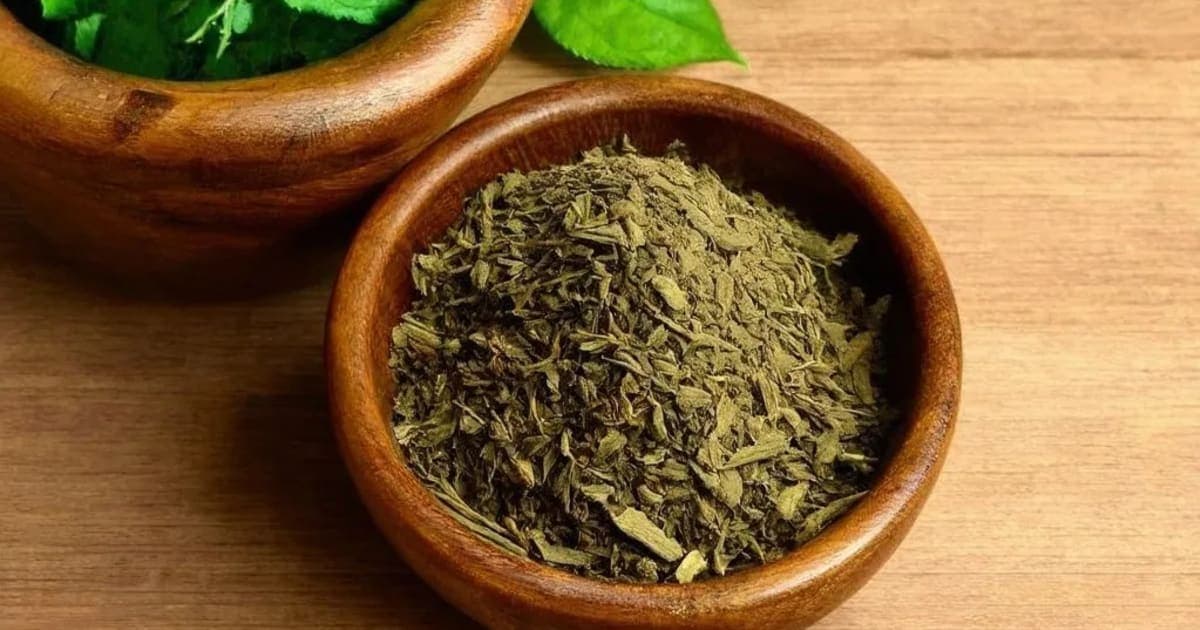
Bhringaraja Svarasa is the fresh, cold-pressed juice extracted from the leaves of the Eclipta alba plant, revered in Ayurveda as a potent liver tonic and the premier remedy for hair health. Unlike dried powders, this raw juice retains volatile oils that make it uniquely effective for Nasya therapy, where a few drops are administered into the nostrils to nourish the brain and sensory organs. Classical texts like the Bhavaprakash Nighantu explicitly categorize this fresh juice as a Rasayana (rejuvenator) that cools the blood while simultaneously stimulating digestion.
When you smell fresh Bhringaraja Svarasa, it has a sharp, earthy scent with a distinct bitterness that lingers on the tongue. This specific taste profile is not accidental; the Bitter (Tikta) and Pungent (Katu) flavors work together to clear toxins from the liver and unblock the subtle channels of the body. A grandmother in rural Kerala might tell you to mix a teaspoon of this juice with warm milk at night to settle a racing mind, or apply the fresh leaf paste directly to the scalp to stop premature graying. It is a living medicine that demands respect for its potency.
"Bhringaraja Svarasa is a unique Ayurvedic preparation where the fresh juice acts as a dual-action healer: cooling the blood to pacify Pitta while its heating potency stokes the digestive fire to clear Vata stagnation."
What are the specific Ayurvedic properties of Bhringaraja Svarasa?
The therapeutic power of Bhringaraja Svarasa is defined by its specific pharmacological profile: it possesses Bitter and Pungent tastes, a heating energy, and a light, dry quality that allows it to penetrate deep into tissues. This combination makes it an exceptional blood purifier that detoxifies the liver while simultaneously opening blocked channels in the body.
Understanding these five fundamental properties helps you determine if this herb matches your body type. While many herbs are purely cooling or heating, Bhringaraja Svarasa balances this by using its bitter taste to reduce heat (Pitta) while its pungent potency (Ushna Virya) ensures it does not clog the system with excess moisture. The following table outlines the exact Ayurvedic classification used by practitioners to prescribe this herb:
| Property (Sanskrit) | Value | What it means for your body |
|---|---|---|
| Rasa (Taste) | Tikta (Bitter), Katu (Pungent) | Bitter taste detoxifies blood and reduces Pitta; Pungent taste stimulates metabolism and clears Kapha congestion. |
| Guna (Quality) | Laghu (Light), Ruksha (Dry) | Light and dry qualities ensure rapid absorption and prevent the accumulation of excess fluids or mucus. |
| Virya (Potency) | Ushna (Heating) | Heating energy stimulates Agni (digestive fire), improves circulation, and helps break down stagnant toxins. |
| Vipaka (Post-digestive effect) | Katu (Pungent) | The long-term metabolic effect remains pungent, continuing to clear channels and support liver function after digestion. |
| Prabhava (Unique action) | Hair nourishment, Liver tonic | A specific, unexplainable action that promotes hair growth and blackens gray hair beyond what its taste alone would suggest. |
How does Bhringaraja Svarasa balance the Doshas?
Bhringaraja Svarasa primarily pacifies Vata and Pitta doshas, making it an ideal remedy for conditions involving anxiety, dry skin, inflammation, or liver heat. By calming the erratic movement of Vata and cooling the excess fire of Pitta, it restores a sense of groundedness and clarity to the body and mind.
However, individuals with a dominant Kapha constitution must use this fresh juice with caution. Because the herb has a heating potency and a pungent post-digestive effect, excessive use can aggravate Kapha, potentially leading to increased congestion, sluggish digestion, or weight gain. It is best used in short bursts or combined with cooling herbs like aloe vera if you have a tendency toward mucus or fluid retention.
In practice, you will find that people with dry, cracked skin or brittle nails (signs of Vata) often see rapid improvement when using the juice externally, while those with acidic reflux or skin rashes (signs of Pitta) benefit from internal doses diluted in water. The key is listening to how your body responds; if you feel a warming sensation that becomes uncomfortable, you are likely exceeding your Kapha threshold.
Who should avoid using Bhringaraja Svarasa?
While Bhringaraja Svarasa is a powerful rejuvenator, it is not suitable for everyone without modification. People with active bleeding disorders, severe hyperacidity, or a history of Kapha-dominant congestion should consult an Ayurvedic practitioner before ingesting the fresh juice. The heating nature of the herb can irritate an already inflamed stomach lining or worsen a cold with heavy mucus production.
Pregnant women should also exercise extreme caution. While the herb is excellent for post-partum recovery to restore hair and strength, the heating potency during pregnancy can sometimes disturb the delicate balance required for fetal stability. Always dilute the juice with water or ghee and never take it on an empty stomach if you have a sensitive digestion. If you experience burning sensations in the stomach or throat, discontinue use immediately.
Frequently Asked Questions
How much Bhringaraja Svarasa should I take daily?
For internal use, the standard dose is typically 2 to 5 ml of fresh juice, often mixed with warm water, honey, or ghee to mitigate its sharp taste. It is best taken in the morning on an empty stomach for liver support or at night for hair and nervous system benefits, but always start with a small amount to test tolerance.
Can I use Bhringaraja Svarasa for gray hair?
Yes, Bhringaraja Svarasa is considered one of the most effective natural remedies for reversing premature graying when applied directly to the scalp as a massage oil base or taken internally. The herb's unique Prabhava (special action) helps nourish the hair follicles and darken the hair shaft over consistent use.
What is the difference between Bhringaraja oil and Bhringaraja Svarasa?
Bhringaraja Svarasa is the raw, fresh juice of the leaf, offering the most potent immediate effects on the liver and blood, while Bhringaraja oil is an infusion of the herb in a carrier oil, which is gentler and better suited for external Nasya therapy and scalp massage without the risk of internal heating.
Does Bhringaraja Svarasa help with anxiety?
Yes, by pacifying Vata dosha, the fresh juice helps ground the nervous system and calm racing thoughts, often used in Nasya therapy to clear the mind and reduce symptoms of stress and insomnia.
Is Bhringaraja Svarasa safe for children?
It can be used for children in significantly reduced doses (typically 1-2 drops in Nasya or a fraction of a teaspoon internally) under strict practitioner guidance, as the heating potency is quite strong for a child's developing digestive system.
Frequently Asked Questions
What is Bhringaraja Svarasa used for in Ayurveda?
Bhringaraja Svarasa is primarily used as a Yakrituttejaka and Hair Nourisher in Ayurvedic medicine. The fresh juice of Bhringraj is a potent liver tonic and is used in Nasya therapy for hair and sensory organ health. It pacifies Vata, Pitta dosha.
How should I take Bhringaraja Svarasa?
Bhringaraja Svarasa can be taken as powder (1/2-1 tsp with warm water or milk), decoction (boil 1 tsp in water), or tablets (1-2 daily). Always start with a low dose and consult an Ayurvedic practitioner for personalized guidance.
Is Bhringaraja Svarasa safe during pregnancy?
Pregnant and nursing women should not take Bhringaraja Svarasa without consulting their doctor first. Most Ayurvedic herbs require medical supervision during pregnancy.
Which dosha does Bhringaraja Svarasa balance?
Bhringaraja Svarasa pacifies Vata, Pitta. Excessive use may increase Kapha dosha.
Can I take Bhringaraja Svarasa daily?
Bhringaraja Svarasa can be taken daily in recommended doses for 4-8 weeks. After that, take a 2-week break before resuming. Long-term use should be supervised by a qualified Ayurvedic practitioner.
What are the side effects of Bhringaraja Svarasa?
When taken in recommended doses, Bhringaraja Svarasa is generally safe. Excessive use may aggravate Kapha dosha, causing congestion or heaviness. Stop use if you experience any adverse reaction.
Related Articles
The Timeless Benefits of Triphala: An Ayurvedic Powerhouse
Discover the transformative benefits of Triphala, an ancient Ayurvedic blend of three fruits that supports digestion, immunity, weight management, and overall vitality.
5 min read
The Divine Benefits of Tulsi (Holy Basil) in Ayurveda
Discover the sacred benefits of Tulsi (Holy Basil) in Ayurveda. From boosting immunity and reducing stress to supporting heart health and digestion, learn how this divine herb can transform your well-being.
4 min read
The Remarkable Benefits of Giloy: An Ayurvedic Powerhouse
Discover the profound health benefits of Giloy, the Ayurvedic 'root of immortality.' Learn how this powerful herb boosts immunity, manages diabetes, improves digestion, and supports skin, hair, and bone health.
5 min read
The Remarkable Benefits of Ashwagandha: An Ayurvedic Perspective
Discover the ancient wisdom of Ashwagandha, a powerful Ayurvedic adaptogen known for reducing stress, boosting immunity, improving sleep, and enhancing physical strength.
4 min read
Brihatyadi Kashayam: Natural Relief for Urinary Tract Disorders and Cystitis
Brihatyadi Kashayam is a cooling Ayurvedic decoction that targets urinary burning and cystitis by balancing Vata and Pitta. Unlike standard teas, this concentrated liquid extract is specifically designed to reduce inflammation in the bladder lining while flushing out toxins.
5 min read
Asphota: Ayurvedic Brain Tonic, Calming Herb & Blood Purifier
Often overlooked, Asphota is a cooling, bitter herb that acts as a gentle brain tonic and blood purifier. While it shares traits with the popular Aparajita, its unique astringent quality makes it particularly effective for stopping bleeding and soothing inflamed tissues.
6 min read
References & Sources
This article is based on principles from classical Ayurvedic texts including Charaka Samhita, Sushruta Samhita, and Ashtanga Hridaya. Content has been reviewed for accuracy by our editorial team. For specific medical conditions, always consult a qualified Ayurvedic practitioner or healthcare provider.
- • Charaka Samhita (चरक संहिता)
- • Sushruta Samhita (सुश्रुत संहिता)
- • Ashtanga Hridaya (अष्टांग हृदय)
Found an error in this article? Let us know