
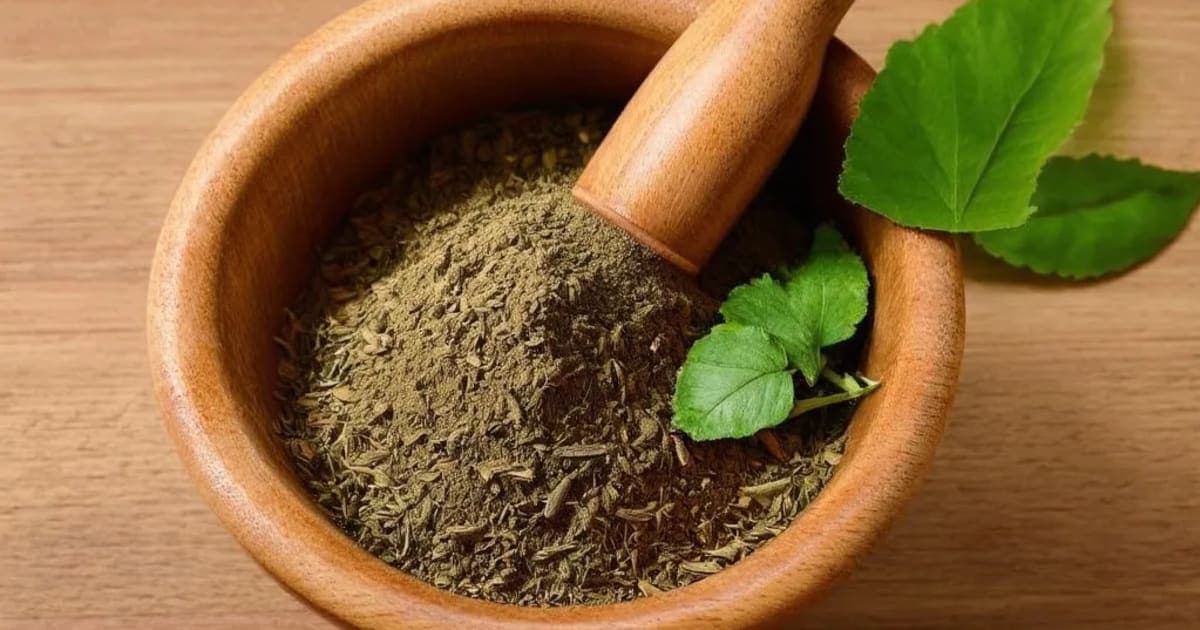
Amrita: The Divine Tridosha Herb for Immunity and Detox
Expert Reviewed
Reviewed by AyurvedicUpchar Editorial Team
What is Amrita and why is it called the 'Divine Herb'?
Amrita, often called the "nectar of immortality," is a rare Tridosha herb in Ayurveda used primarily to boost immunity, purify blood, and manage chronic fevers without aggravating any body type. Unlike most heating herbs that might flare up Pitta or dry out Vata, Amrita balances Vata, Pitta, and Kapha simultaneously, making it a uniquely safe daily tonic for almost everyone.
You might know this climbing shrub by its more common name, Guduchi or Tinospora cordifolia. When you snap a fresh stem, you will notice a distinct bitterness that lingers, followed by a subtle sweetness—a taste profile that signals its deep cleansing power. My grandmother used to say that if a medicine tastes like the earth after rain, it is doing its job. She would chew a small piece of the fresh vine or boil the dried stems into a dark, earthy tea (Kashaya) during the monsoon to prevent seasonal flu. This isn't just folklore; the Charaka Samhita, one of Ayurveda's oldest texts, classifies Amrita as a Rasayana (rejuvenator) specifically for its ability to restore vitality after long illness.
What are the Ayurvedic properties of Amrita?
The Ayurvedic properties of Amrita define exactly how it interacts with your tissues, acting as a light, heating agent that detoxifies while nourishing the body long-term. Its bitter and astringent tastes scrape away toxins (Ama), while its heating potency kindles digestive fire without burning sensitive tissues. This specific combination allows it to clear blockages in the channels (Srotas) while leaving the system stronger than before.
In Dravyaguna Shastra, the science of Ayurvedic pharmacology, every herb is mapped by five fundamental characteristics. Understanding these helps you see why Amrita works where other herbs fail. Here is the complete pharmacological profile:
| Property (Sanskrit) | Value | What it means for your body |
|---|---|---|
| Rasa (Taste) | Tikta (Bitter), Kashaya (Astringent) | Detoxifies blood, reduces inflammation, and stops minor bleeding or excess secretion. |
| Guna (Quality) | Laghu (Light) | Penetrates deep into tissues quickly without causing heaviness or sluggishness. |
| Virya (Potency) | Ushna (Heating) | Stimulates metabolism and circulation, helping to burn off cold-type toxins. |
| Vipaka (Post-digestive) | Madhura (Sweet) | Leaves a nourishing, building effect on tissues after digestion is complete. |
| Prabhava (Special Effect) | Rasayana (Rejuvenating) | Uniquely restores immune function and longevity beyond what its taste suggests. |
Which doshas does Amrita balance?
Amrita is one of the few herbs that pacifies all three doshas—Vata, Pitta, and Kapha—making it an exceptional choice for complex health conditions where multiple imbalances exist. While most heating herbs aggravate Pitta (fire) and most cooling herbs disturb Vata (air), Amrita's unique post-digestive sweetness cools the system even as its heating potency cleans it. This makes it safe for daily use regardless of your constitution (Prakriti).
Think of Amrita as a regulator rather than a forceful pusher. If you are Vata-dominant, its unctuous quality after digestion soothes your dryness. If you are Pitta-dominant, the bitter taste cools your internal heat despite the herb's warming energy. For Kapha types, the lightness and astringency help shed excess weight and mucus. This balancing act is why you find it in formulations for everything from joint pain (Amavata) to recurring skin issues.
How do you know if you need Amrita?
You likely need Amrita if you feel constantly tired despite sleeping, experience frequent seasonal allergies, or notice your digestion slowing down with heavy feelings after meals. It is particularly useful for those "stuck" states where you feel toxic but too weak for harsh cleansing methods. Signs include persistent low-grade fever, cloudy skin, brain fog, or a coated tongue that doesn't clear with brushing.
Practically, people often start taking Amrita when they hit a wall of chronic fatigue or recurring infections. A simple home test is to observe your energy after lunch; if you consistently crash or feel bloated, the light, digestibility-enhancing qualities of Amrita can help reset that rhythm. Many practitioners suggest starting with a warm milk decoction at night if you feel weak, or a warm water brew in the morning if you feel sluggish and heavy.
Frequently Asked Questions
Can I take Amrita every day?
Yes, Amrita is considered safe for daily consumption as a Rasayana (rejuvenative) for most people due to its Tridosha-balancing nature. However, those with severe autoimmune conditions should consult an Ayurvedic practitioner before starting high doses, as its immune-boosting effects can sometimes over-stimulate an already hyper-active system.
What is the best way to consume Amrita for immunity?
For general immunity, the classic method is boiling dried Amrita stems in water until the liquid reduces by half, then drinking it warm. For weakness or Vata imbalance, simmering the stem in milk with a pinch of ginger enhances its nourishing and absorbable qualities.
Does Amrita have any side effects?
Amrita is generally well-tolerated, but excessive intake may cause mild constipation in very dry (Vata) individuals due to its astringent taste. Ensuring you drink enough warm water throughout the day usually mitigates this drying effect.
Frequently Asked Questions
What is Amrita used for in Ayurveda?
Amrita is primarily used as a rasayana and Antipyretic in Ayurvedic medicine. Divine herb for immunity, detox and chronic fevers. It pacifies tridosha dosha.
How should I take Amrita?
Amrita can be taken as powder (1/2-1 tsp with warm water or milk), decoction (boil 1 tsp in water), or tablets (1-2 daily). Always start with a low dose and consult an Ayurvedic practitioner for personalized guidance.
Is Amrita safe during pregnancy?
Pregnant and nursing women should not take Amrita without consulting their doctor first. Most Ayurvedic herbs require medical supervision during pregnancy.
Which dosha does Amrita balance?
Amrita pacifies tridosha and is one of the rare Tridosha herbs that balances all three doshas.
Can I take Amrita daily?
Amrita can be taken daily in recommended doses for 4-8 weeks. After that, take a 2-week break before resuming. Long-term use should be supervised by a qualified Ayurvedic practitioner.
What are the side effects of Amrita?
When taken in recommended doses, Amrita is generally safe. Overconsumption may cause digestive discomfort. Stop use if you experience any adverse reaction.
Related Articles
The Timeless Benefits of Triphala: An Ayurvedic Powerhouse
Discover the transformative benefits of Triphala, an ancient Ayurvedic blend of three fruits that supports digestion, immunity, weight management, and overall vitality.
5 min read
The Divine Benefits of Tulsi (Holy Basil) in Ayurveda
Discover the sacred benefits of Tulsi (Holy Basil) in Ayurveda. From boosting immunity and reducing stress to supporting heart health and digestion, learn how this divine herb can transform your well-being.
4 min read
The Remarkable Benefits of Giloy: An Ayurvedic Powerhouse
Discover the profound health benefits of Giloy, the Ayurvedic 'root of immortality.' Learn how this powerful herb boosts immunity, manages diabetes, improves digestion, and supports skin, hair, and bone health.
5 min read
The Remarkable Benefits of Ashwagandha: An Ayurvedic Perspective
Discover the ancient wisdom of Ashwagandha, a powerful Ayurvedic adaptogen known for reducing stress, boosting immunity, improving sleep, and enhancing physical strength.
4 min read
Brihatyadi Kashayam: Natural Relief for Urinary Tract Disorders and Cystitis
Brihatyadi Kashayam is a cooling Ayurvedic decoction that targets urinary burning and cystitis by balancing Vata and Pitta. Unlike standard teas, this concentrated liquid extract is specifically designed to reduce inflammation in the bladder lining while flushing out toxins.
5 min read
Asphota: Ayurvedic Brain Tonic, Calming Herb & Blood Purifier
Often overlooked, Asphota is a cooling, bitter herb that acts as a gentle brain tonic and blood purifier. While it shares traits with the popular Aparajita, its unique astringent quality makes it particularly effective for stopping bleeding and soothing inflamed tissues.
6 min read
References & Sources
This article is based on principles from classical Ayurvedic texts including Charaka Samhita, Sushruta Samhita, and Ashtanga Hridaya. Content has been reviewed for accuracy by our editorial team. For specific medical conditions, always consult a qualified Ayurvedic practitioner or healthcare provider.
- • Charaka Samhita (चरक संहिता)
- • Sushruta Samhita (सुश्रुत संहिता)
- • Ashtanga Hridaya (अष्टांग हृदय)
Found an error in this article? Let us know